This site uses affiliate links to Amazon.com Books for which IANDS can earn an affiliate commission if you click on those links and make purchases through them.
1. About John Edward
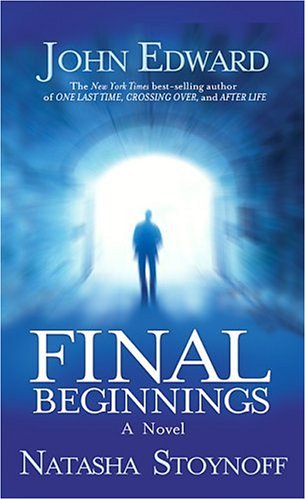
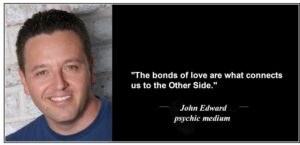
John Edward (www.johnedward.net) is an internationally acclaimed psychic medium who can communicate with the world beyond. Deeply compelling, often startling and even humorous, his honest and almost skeptical attitude regarding psychic phenomena has made the staunchest of skeptics take notice and listen. It has also earned him an enormous following from all walks of life and ages.
John Edward is one of the most well-known psychic mediums in modern popular culture. Rising to fame through his television programs Crossing Over with John Edward and John Edward Cross Country, he became widely recognized for claiming to communicate with the spirits of deceased people. His public readings, emotional messages, and discussions about life after death introduced millions of viewers to ideas connected with mediumship, spirituality, and the possibility of survival after physical death.
Beyond television, Edward has written books, hosted live events around the world, and spoken openly about spirituality, grief, and the continuing bond between the living and the dead. His career reflects the growing public fascination with paranormal experiences, communication with spirits, and questions about consciousness and the afterlife. John Edward remains a significant and influential figure in contemporary discussions about psychic phenomena and spiritual belief.
2. An Example of John Edward’s Psychic Ability
The following is an excerpt from another book of Edward’s, One Last Time (1998), and is a transcript of one of Edward’s most interesting readings where he receives very specific and detailed information from the Other Side for a woman named Mary who lost her son in a tragic accident.
John: The first thing that’s coming through is your son. Do you have a son who’s passed?
Mary: Yes.
John: Has he passed in the last two years? Did he pass in June or July?
Mary: Yes.
John: Who’s Tony? Is that his dad? Please let his father know he’s okay. Very important. He says Dad’s all alone, lost.
Mary: That’s true.
John: He’s showing me a lacrosse stick.
Mary: His dad coaches lacrosse.
John: Is his father a teacher? Because he’s showing me my high school. I went to Glen Cove High.
Mary: He teaches at Glen Cove. You know him.
John: I know his father? Don’t say his name. Normally I wouldn’t say Glen Cove High School, I’d just say high school. Hold on. Is this an impact passing? Is this a vehicular kind of thing? Was he hit by a car? Was he on a bicycle?
Mary: Yes, he was.
John: He wants you to know he’s okay. Who’s Robert?
Mary: His grandpa.
John: He wants him to know he’s okay. And who’s Mary, besides you? Has your husband’s mother passed?
Mary: No.
John: It’s on his side of the family. Was the passing Andrew’s fault?
Mary: I don’t know. That’s what we’re trying to find out.
John: Because in a very minor, minor way he’s telling me the accident was his fault. He’s showing me my bicycle when I was a kid. With a humongous flag. It’s not that, right? I feel like he wasn’t visible. Was this in a residential area?
Mary: (Nods).
John: I feel like he jutted out. I feel like he’s taking responsibility for this. She might have been going faster than she should have, but I feel like he was the one who jutted out. Is he Johnny? Or Joey? Who’s that?
Mary: His friend.
John: And Steven? Who’s the “S”?
Mary: Steph?
John: Is that his friend?
Mary: Yes. Girlfriend.
John: Who’s Danny?
Mary: Another friend.
John: Was he in seventh grade, or sixth grade?
Mary: No.
John: Was he sixteen or seventeen?
Mary: Sixteen.
John: He was showing me a six or a seven. Feels like there’s a distance between you and your husband. Instead of coming close together, you’re here and he’s there. You guys need to talk, to get connected again.
Mary: I know, but I don’t know how to do that. His father is very much hurting.
John: He says you have to tell his father he’s okay. It’s important. He needs to … I feel like there’s a constant water-flow of emotions. He has not dealt with this and it’s important that he knows that his son is okay. He has to give himself the time and opportunity. The grief seems like he just cuts it off. You’re more accepting of this passing. It doesn’t mean you like it any more. He just had so many aspirations and like, “He was a smart kid. Why did this happen?”
Mary: Does he have a message for his brother?
John: He might not, so don’t look for that. Does he have his shoes or his sneakers?
Mary: Andy was wearing his father’s sneakers.
John: Who’s Chris – who’s the “C” or “K”?
Mary: Friend.
John: Does he have a ring? Or does your husband have his ring?
Mary: He has a watch.
John: He’s showing me something symmetrical. Did your husband want to give him one of his rings and he didn’t get an opportunity to? He’s talking about a ring … Did he play hockey?
Mary: That’s what I was looking for.
John: And you buried him with a jersey?
Mary: Not with a jersey, but a hockey stick on his headstone.
John: Because I see something sports-wise. Did you have a floral thing made with the sports?
Mary: Yes, the room was filled with floral arrangements in hockey motifs, and his hockey jersey was hanging.
John: Also, does his father have something around his neck that was Andy’s?
Mary: He wanted a chain but he didn’t get it and when he died (Tony) went out and got it for himself.
John: A gold chain?
Mary: Yes. Andy wanted one and he never got it. And out of the clear blue my husband went out and bought the same chain Andy wanted, without knowing which one it was. And my husband never liked chains or jewelry.
John: Okay, tell your husband he was guided to buy that by his son. I must not have had him [as a teacher]. Because I keep asking him to tell me who the teacher is.
Mary: I’m sure you had him. Because when I walked in I knew you knew him.
John: You did?
Mary: It was the way you said his name.
John: Now I want to know who it is! I’ll go room to room [in the high school building] …Okay, I just said, “Take me into the building,” and he took me in the front entrance. And I said, “Should I go right?” And he said no. So I said, “Should I go straight?” And he said yes. So I went straight and he gave me the feeling it’s downstairs on the first hallway. Yes?
Mary: Yes.
John: Don’t tell me. I will get it. I know who it is … does he teach social studies?
Mary: (Nods).
John: You know how I know? Because your son said to me … I said “Do something that I would understand, that I would identify with one of my teachers.” The only teacher who ever threw me out of a class … Mr. Miracolo?
Mary: (Nods and smiles)
John: I knew it! He was the only teacher to ever throw me out of a class. I had a trigonometry class that I wasn’t ready for the next period. And I asked your husband for a pass to go to the bathroom. And instead I went to an extra help class for trig. And when I came back, Mr. Miracolo looked at me and said, “You – out!” And your son showed me that. He wants you to know he’s okay. Did he have a certain restaurant he used to go to all the time? They have a mirror up in this restaurant with a like scratchy glass on it, like you can kind of see through it but you can’t. I feel almost like your husband was looking in that mirror and he saw your son. Your son’s confirming that you did see him when you thought you saw him.
Mary: Does he know how much we love him?
John: Just understand that this whole session comes through to you out of love.
3. An Analysis of John Edward’s Reading
Psychic readings like the ones given by John Edward are often seen as strong examples of mediumship because they include so many personal details. In this reading, Edward gives information to a grieving mother named Mary about her son, Andrew (“Andy”), who died in a bicycle accident. The session includes many things that show real communication with the dead.
One of the most noticeable parts of the reading is the large number of specific names, places, and personal details Edward mentions. He correctly identifies the recent death of Mary’s son, when the death happened, the father’s emotional struggles, the father’s connection to lacrosse, and the fact that he taught at Glen Cove High School. Edward also talks about the bicycle accident, mentions several friends by name or initial, refers to hockey memorial items, and even recognizes a chain Andy wanted before he died. These details are meaningful because they are very personal and would be difficult to guess randomly. The reading becomes even more dramatic when Edward realizes he personally knew Andy’s father as a teacher and later identifies him by name after mentally “walking” through the school building.
The accuracy and emotional power of these details are too strong to be simple coincidence. The emotional healing during the session is evidence that real communication happened. Edward repeatedly tells Mary that her son is “okay” and encourages healing between her and her grieving husband. The reading focuses on comfort, love, emotional connection, and life after death, which are common themes in psychic readings and near-death experience (NDE) research.
Another important part of the reading is the way Edward communicates. Instead of giving long speeches, he asks short questions and tries to interpret symbolic images and feelings. He often receives initials, pictures, emotions, or broken pieces of information that Mary helps explain. For example, Edward first mistakes “Steph” for “Steven” and asks if Andy was in sixth or seventh grade before realizing the number actually referred to age sixteen or seventeen. This shows how psychic readings often depend on interpretation instead of exact statements. People may see this as evidence that messages from the Other Side come through the medium in symbolic or imperfect ways.
At the same time, some parts of the reading are very specific and harder to explain away. The connection to Glen Cove High School, identifying the teacher, the hockey memorial items, and the gold chain story give the impression that Edward had deeply personal knowledge. These moments strengthen the idea that mediums may gain information in ways that go beyond normal explanation.
From a psychological point of view, the reading shows how important psychic sessions can be for grief and emotional healing. Mary and her husband are struggling deeply after the sudden loss of their teenage son. Edward’s message gives them comfort, reassurance, and the feeling that Andy still exists in some spiritual way. Even people who are unsure about paranormal experiences can see how strongly human beings search for meaning, connection, and hope after tragedy.
Overall, this reading is a strong example of why John Edward became one of the most famous psychic mediums in America. The session combines emotional healing, personal details, symbolic impressions, and apparent accuracy in a way many people find convincing. The reading raises important questions about consciousness, grief, and the possibility of life after death.