This site uses affiliate links to Amazon.com Books for which IANDS can earn an affiliate commission if you click on those links and make purchases through them.
1. Suicide NDEs and New Perspectives on Life
Interestingly, while near-death experience (NDE) survivors generally report a reduced fear of death, this doesn’t translate into a desire to hasten their own demise. Instead, many NDErs describe a sense of peace with the idea of death but also a renewed determination to live fully and meaningfully. They often feel as though they have been given a second chance or a glimpse of something profound that changed their outlook on existence.
This dual sense of calm about death and commitment to life is particularly striking in the context of suicide-related NDEs. The overwhelming sense of peace and love experienced during the NDE reassures survivors that death is not something to be feared, while also helping them see that life has intrinsic value and purpose.
2. Benjamin’s Suicide NDE
The following is Benjamin’s suicide NDE testimony sent to Kevin Williams by email in his own words.

I had a near-death experience over 4 years ago. It was in 1999. It was a couple of days before my 20th birthday.
I took an overdose of barbiturates on a cold autumn night in April beneath a city building. After I finished taking the pills, I went to sleep.
I felt this tugging at me. It was really warm and sensual, like something touching me very softly and very warm.
I felt this incredible euphoria. I felt like a feather floating from place to place.
There was this orange glow. It was like a sunset but a wide bright orange sunset and there was this coolness like a breeze blowing past me.
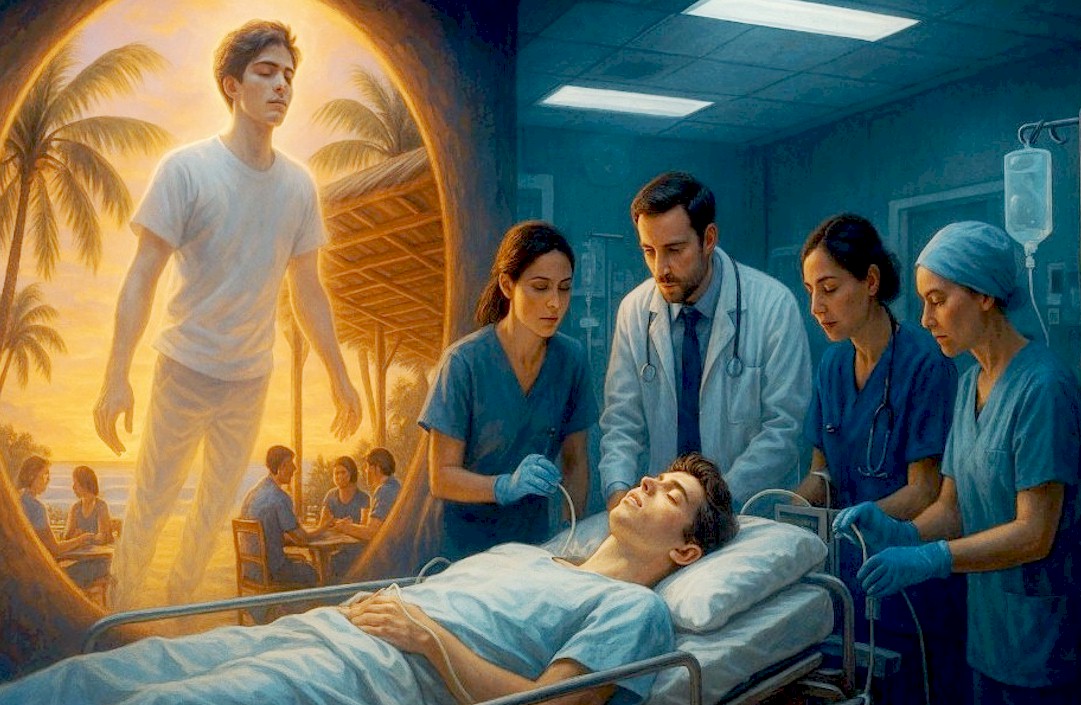
The next thing I knew, I was in this tropical paradise and there were these tourists walking around.
There I was sitting in this cafe that was shaded with palms and bamboo rafters.
I felt this cool moist misty breeze. It was like that misty air you get when someone is spraying the hose and you are in the vicinity.
I was talking to this man who said that it wasn’t time for me to go down to the beach. I wanted to go to the beach but this man told me that it wasn’t the right time yet. He walked away.
The misty breeze got a bit cooler and I was swept off my feet.
Next, I am in the local city hospital, lying there.
The following day, I started vomiting because they pumped my guts out to remove the toxins from inside.
I felt weird. Everyone said I had been unconscious and in a critical condition but everything was going to be okay.
Well, that day ended and I was whisked off to the psychiatric unit that night.
I’m wondering if heaven lies in the oceans.
3. An Analysis of Benjamin’s Suicide NDE
Benjamin’s suicide NDE gives an emotional view of despair and the meaning of life. Unlike many traditional NDE stories that include tunnels, beings of light, or detailed life reviews, Benjamin’s experience felt peaceful and full of strong sensory details. He described tropical scenery and intense feelings of happiness. His experience felt more like entering a place of comfort instead of fear or punishment. This matches a common pattern in many suicide NDEs. Instead of feeling judged or condemned, people often describe overwhelming peace and reassurance.
One of the most important parts of Benjamin’s story is when the mysterious man told him that “it wasn’t time” for him to go to the beach yet. Symbolically, the beach may represent a deeper spiritual place. The message suggests that even though Benjamin came close to death, his life was not finished. This idea appears often in NDE stories. Many NDErs are told they must return because they still have something to do. Instead of supporting suicide as a way to escape suffering, these experiences often strengthen the idea that life still has meaning, even during deep emotional pain.
The tropical setting also seems important. Water, oceans, and beaches are powerful symbols in psychology and spirituality. Oceans often represent eternity or the border between worlds. Benjamin’s final question – “I’m wondering if heaven lies in the oceans” – shows how deeply the experience affected his spiritual thinking. His NDE changed death from something frightening into something beautiful and emotionally meaningful. At the same time, he returned to normal life and medical recovery, suggesting that the experience was not meant to encourage death, but to change the way he viewed life.
Another important part of Benjamin’s testimony is how real and emotionally intense the experience felt to him. He described the atmosphere with unusual detail. Many people who have NDEs say their experiences felt “more real than real,” and Benjamin’s story reflects that feeling. The rich sensory details stand in sharp contrast to the painful physical reality waiting for him in the hospital afterward. This contrast may reflect the struggle many suicide survivors feel between emotional pain and the desire for relief.
Benjamin’s account also challenges common stereotypes about suicide NDEs. Some people assume that suicide attempts would only lead to frightening or hellish experiences. However, research on NDEs has shown that many suicide-related NDEs are peaceful and life-changing instead. These experiences often cause survivors to rethink their lives and emotional struggles. The peace felt during the NDE usually does not increase suicidal feelings afterward. Instead, many survivors come back with less fear of death and a stronger sense that life has value and meaning.