This site uses affiliate links to Amazon.com Books for which IANDS can earn an affiliate commission if you click on those links and make purchases through them.
1. Introduction to Islamic Afterlife Beliefs
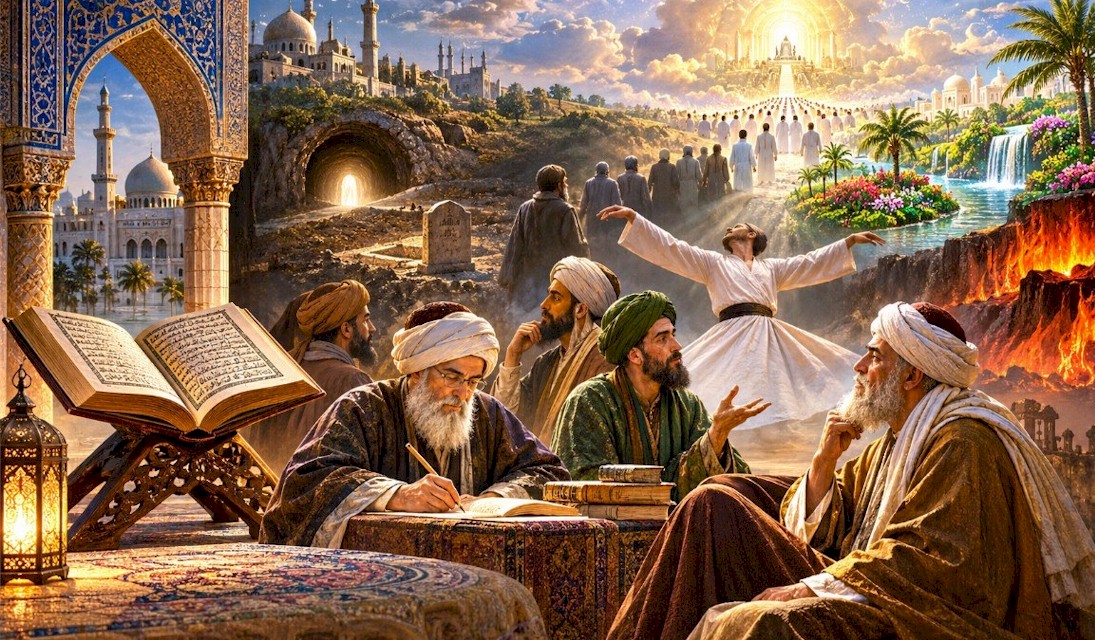
Islamic beliefs about the afterlife have developed over more than fourteen centuries, beginning with the revelations of the Qur’an in the 7th century and expanding through the teachings of the Prophet Muhammad, Islamic theology, philosophy, Sufism, and contemporary Muslim thought. Throughout this history, the afterlife has remained central to Islam‘s understanding of human existence, divine justice, moral responsibility, and the ultimate purpose of creation.
At the heart of Islamic eschatology—the study of death, judgment, and humanity’s final destiny—is the belief that earthly life is temporary and that human beings will ultimately return to God (Allah). The Qur’an describes death not as the end of existence but as a transition toward resurrection, judgment, and an eternal or otherwise divinely determined destiny. The righteous are promised Paradise (Jannah), while those who reject God and persist in wrongdoing face divine punishment in Hell (Jahannam). God’s mercy, justice, and forgiveness are recurring themes throughout these teachings (Qur’an 3:185; 21:35; 29:57; 39:53).
Although belief in resurrection and final judgment has remained fundamental to mainstream Sunni and Shi’a Islam, Muslim thinkers have interpreted the nature of the soul, the intermediate state after death, the descriptions of Paradise and Hell, and the ultimate fate of humanity in different ways. Some have emphasized the literal reality of bodily resurrection and physical rewards and punishments. Others have explored spiritual, philosophical, mystical, or symbolic dimensions of the afterlife.
The historical development of Islamic afterlife beliefs can be understood through several overlapping periods:
1. Pre-Islamic Arabia (Before 610 CE): Diverse beliefs about death, spirits, and the possibility of continued existence.
2. Qur’anic Revelation (610–632 CE): Resurrection, judgment, Paradise, Hell, and divine mercy become central religious teachings.
3. Early Islamic Tradition (7th–8th Centuries): Hadith literature develops detailed accounts of the grave, the intermediate state, and events following death.
4. Classical Islamic Theology (8th–11th Centuries): Muslim theologians debate free will, divine justice, resurrection, and eternal punishment.
5. Islamic Philosophy and Sufism (9th–13th Centuries): Philosophers and mystics explore the soul’s immortality, spiritual transformation, and reunion with God.
6. Medieval Islamic Eschatology (12th–15th Centuries): Elaborate descriptions of the afterlife emerge in theological, mystical, and devotional literature.
7. Early Modern Islamic Thought (16th–18th Centuries): Shi’a philosophers, Sufi traditions, and reform movements reinterpret or reaffirm established teachings.
8. Modern and Contemporary Islam (19th–21st Centuries): Muslim scholars reconsider the afterlife in relation to science, modern philosophy, religious pluralism, and contemporary spirituality.
This timeline traces these developments while distinguishing teachings widely accepted across Islam from interpretations associated with particular theological schools, philosophers, and mystical traditions.
2. Pre-Islamic Arabian Beliefs (Before 610 CE)
Death, spirits, and the religious environment of Arabia: Before the emergence of Islam, the Arabian Peninsula contained a variety of religious communities, including Arabian polytheists, Jews, Christians, and groups influenced by surrounding religious traditions. Their beliefs about death and the afterlife were not uniform. Some Arabian communities practiced forms of ancestor veneration, maintained elaborate burial customs, and believed that spirits or supernatural beings could interact with the living. Others expressed skepticism about resurrection or life beyond death (Smith & Haddad, 2002).
Pre-Islamic Arabic poetry frequently emphasized the uncertainty of human existence, the inevitability of death, and the importance of preserving one’s reputation through descendants, poetry, and tribal memory. For some people, lasting fame appeared more attainable than personal immortality.
The Qur’an preserves arguments attributed to people who doubted that the dead could be restored to life. For example, Qur’an 45:24 describes people who regarded earthly existence as the only life and attributed death to the passage of time. Other passages challenge the claim that decayed bones could never be resurrected (Qur’an 36:78–79). These passages demonstrate that the Qur’anic proclamation of resurrection confronted genuine religious and philosophical disagreements within its original audience.
Jewish, Christian, and Iranian religious influences: Islam emerged within a broader Near Eastern environment where beliefs in resurrection, judgment, heaven, and hell were already well established. Jewish apocalyptic traditions described the resurrection of the dead, divine judgment, and the vindication of the righteous (Daniel 12:2). Christianity taught resurrection, eternal life, and final judgment, while Zoroastrian traditions included the judgment of souls, a bridge associated with the afterlife, and cosmic renewal. Scholars have identified similarities between these traditions and later Islamic eschatology. Some have argued that particular images in Islamic literature reflect the transmission and reinterpretation of earlier religious ideas, especially from Iranian traditions. Nevertheless, similarities do not establish that every Islamic teaching was directly borrowed from an earlier religion. Islamic teachings developed their own theological framework centered on God’s unity, justice, and mercy (Akbar, 2019; Lange, 2016).
Historical significance: Islam emerged in a religious environment containing diverse beliefs about death, but the Qur’an established resurrection and accountability before God as essential components of its religious message.
3. The Qur’anic Period (610–632 CE)
Resurrection and the Day of Judgment: The revelations received by the Prophet Muhammad between approximately 610 and 632 CE established the foundations of Islamic afterlife beliefs. Early Meccan revelations repeatedly warned that earthly life would end and that humanity would face a future day of resurrection and judgment. These teachings challenged the assumption that death permanently destroyed human existence. The Qur’an describes the Day of Resurrection (Yawm al-Qiyamah) as an event in which the dead will rise, humanity will gather before God, and every person’s actions will be judged. Qur’an 99:6–8 teaches that even the smallest good or evil action will become known. Qur’an 21:47 describes the establishment of just scales for judgment, while Qur’an 36:78–79 answers those who question God’s ability to restore decayed bodies. Resurrection is therefore not simply the continuation of consciousness after death. It involves God’s restoration of human beings and the final disclosure of the moral meaning of their earthly lives (Chittick, 2009; Smith & Haddad, 2002).
The soul and the transition at death: The Qur’an uses several terms associated with human existence, especially nafs, often translated as self or soul, and ruh, commonly translated as spirit. However, these words do not correspond perfectly to later philosophical distinctions between an immortal soul and a physical body. Qur’an 17:85 emphasizes the limited nature of human knowledge concerning the spirit. Qur’an 39:42 describes God taking souls at death and during sleep, returning those whose time of death has not yet arrived. This passage later became important to Muslim discussions of the relationship between sleep, dreams, death, and the soul’s existence apart from ordinary waking consciousness. Qur’an 3:185 declares that every soul will experience death, while Qur’an 29:57 connects death with humanity’s eventual return to God. These teachings established death as a transition within a larger divine order rather than the final destruction of personal existence.
The intermediate state – Barzakh: One of the most important concepts in Islamic afterlife theology is Barzakh, meaning a barrier or intermediate separation. Qur’an 23:99–100 describes a barrier preventing the dead from returning to earthly life until resurrection. Later Muslim scholars developed this into the concept of an intermediate state between individual death and the final resurrection. The Qur’an provides comparatively limited detail about the experiences of ordinary individuals during this period. Later hadith literature and theological writings describe a more elaborate existence involving awareness, questioning, comfort, or punishment.
The distinction is important: the fully developed doctrine of Barzakh emerged through centuries of interpretation rather than appearing in complete form in the Qur’an itself (Günther, 2020; Tesei, 2016).
Paradise – Jannah: The Qur’an describes Paradise as a realm of peace, fulfillment, divine generosity, and lasting happiness. Its imagery includes gardens, flowing rivers, abundant food, beautiful dwellings, companionship, and freedom from suffering. Qur’an 47:15 describes rivers of water, milk, wine, and honey, while Qur’an 56:10–40 presents different groups of the blessed and their rewards. Qur’an 32:17 suggests that the full nature of heavenly happiness exceeds ordinary human knowledge. An especially important spiritual dimension appears in Qur’an 75:22–23, which many Sunni theologians have interpreted as referring to the blessed vision of God, known as ru’yat Allah. Other theological traditions have interpreted the passage differently, particularly when rejecting the possibility of physically seeing God. Thus, Paradise contains both sensory imagery and the promise of spiritual closeness to God.
Hell – Jahannam: The Qur’an also presents Hell as a realm of divine judgment, punishment, and separation from the blessings enjoyed by the righteous. Its descriptions include fire, intense heat, regret, confinement, and the consequences of rejecting divine guidance. Qur’an 4:56 describes the severity of punishment, while Qur’an 78:21–30 portrays Hell as a destination for transgressors. Yet divine mercy remains a major Qur’anic theme. Qur’an 39:53 instructs those who have sinned not to despair of God’s mercy, while Qur’an 7:156 emphasizes the breadth of that mercy. These passages later became central to debates about whether punishment is necessarily everlasting for every person who enters Hell, whether some people may eventually be released, and how divine justice relates to universal mercy.
The A’raf – The Heights: Qur’an 7:46–49 describes a boundary between Paradise and Hell, associated with people standing upon the A’raf, or Heights. Classical commentators disagreed about the identity of these people. Some understood them as individuals whose good and bad deeds were balanced, while others identified them with particular groups of witnesses or spiritually distinguished figures. The passage contributed to later Islamic discussions of intermediate conditions and the complexity of divine judgment. However, the A’raf should not simply be equated with the Christian doctrine of Purgatory. Its meaning and function are different and remain subjects of interpretation.
Historical significance: By Muhammad’s death in 632 CE, Islam possessed a comprehensive scriptural framework of death, resurrection, judgment, Paradise, Hell, and divine mercy. Later generations developed these teachings into increasingly elaborate descriptions of the afterlife (Lange, 2016; Rustomji, 2018).
4. The Early Islamic and Hadith Period (7th–9th Centuries)
The expansion of teachings about life after death: Following Muhammad’s death, Muslims preserved and transmitted reports concerning his sayings, actions, and teachings. These reports, known as hadith, became a major source of Islamic theology and religious practice. Although the Qur’an contains the fundamental principles of the afterlife, hadith collections provide additional descriptions of what happens immediately after death, how the deceased experience the grave, and what events precede final judgment. The earliest centuries also witnessed storytelling traditions about Paradise and Hell. Some incorporated material associated with Jewish and Christian narratives, often called Isra’iliyyat. Muslim scholars differed in how they evaluated such material and whether it could reliably supplement Qur’anic teaching (Lange, 2016).
The questioning of the dead: A prominent teaching in traditional Sunni Islam concerns the questioning of the deceased in the grave. According to widely transmitted hadith traditions, two angels, commonly identified as Munkar and Nakir, question the dead about their faith. The deceased may experience reassurance and comfort or fear and punishment, depending on their spiritual condition. Sahih Muslim 2870 describes the deceased becoming aware of departing mourners after burial. Related reports describe the testing of faith in the grave. This teaching helped establish the concept that the dead may experience some form of conscious existence before the general resurrection. The details of grave questioning vary among Islamic traditions, and Muslim scholars have debated whether these experiences should be understood in physical, spiritual, or otherwise unseen terms (Muslim ibn al-Hajjaj, n.d.; Smith & Haddad, 2002).
Comfort and punishment in the grave: The doctrines of na’im al-qabr (comfort or bliss in the grave) and adhab al-qabr (punishment in the grave) became important features of traditional Islamic eschatology. These teachings describe an initial experience of divine reward or punishment before the final resurrection. The grave, therefore, came to represent more than a physical burial place. It could also signify a condition of postmortem existence in which the consequences of earthly actions begin to become apparent. Theologians differed over how the soul and body participate in these experiences, especially when the physical body has decomposed.
The Sirat Bridge: Another important feature of Islamic eschatology is the Sirat, a bridge or passage associated with the final judgment and the crossing over Hell. In many traditional accounts, the righteous cross safely through divine assistance, while others struggle or fall. The Sirat became a powerful symbol of moral accountability and the difficulty of salvation. Although Qur’an 37:23 uses language related to a path leading toward Hell, the detailed bridge imagery is developed primarily through hadith and subsequent literature.
Intercession – Shafa’ah: Early Islamic traditions also developed the doctrine of shafa’ah, or intercession. According to widely accepted Sunni teachings, God may permit the Prophet Muhammad and other authorized intercessors to plead on behalf of certain people at the final judgment. Intercession does not operate independently of God; its effectiveness depends entirely on divine permission. Qur’an 2:255 and 20:109 establish this principle, while hadith literature expands upon Muhammad’s role as an intercessor. Shi’a traditions likewise emphasize intercession, including the intercessory significance of Muhammad and the Imams, although theological details differ. Intercession became particularly important to discussions of whether sinful believers might eventually be released from Hell.
Early Shi’a understandings of the afterlife: The development of Shi’a Islam introduced additional theological emphasis on the authority of the Prophet’s family, the Imams, and their relationship to divine guidance. In Twelver Shi’a thought, the Imams are understood as divinely appointed spiritual authorities whose teachings illuminate the meaning of resurrection, judgment, and salvation. Some Shi’a traditions also describe raj’a, a limited return of certain individuals to earthly life before the final resurrection. This is distinct from reincarnation because it concerns a particular eschatological return rather than an ongoing cycle of births into different bodies. Both Sunni and Shi’a traditions affirm resurrection and final judgment, even though they differ concerning religious authority, intercession, and particular events preceding the end of history.
Historical significance: Between the 7th and 9th centuries, Islamic afterlife beliefs expanded from the Qur’an’s central proclamations into a detailed religious narrative involving the grave, angels, Barzakh, resurrection, intercession, and the passage toward Paradise or Hell (Lange, 2016; Smith & Haddad, 2002).
5. Classical Islamic Theology (8th–11th Centuries)
The emergence of theological schools: As Islamic civilization expanded, theologians began debating questions that arose from the Qur’an and hadith literature. These included whether human beings possess genuine freedom, whether God must reward righteousness and punish wrongdoing, whether grave punishment is literal, and whether Hell is eternal. Such debates developed within kalam, the discipline of Islamic speculative theology.
The Mu’tazilites and divine justice: The Mu’tazilite movement, prominent between the 8th and 10th centuries, emphasized divine unity, justice, and human moral responsibility. Mu’tazilite theologians argued that human beings must possess meaningful freedom if divine judgment is to be just. They generally maintained that God acts justly and does not arbitrarily punish people for actions beyond their responsibility. Their doctrine of the intermediate position held that a Muslim guilty of a grave sin without repentance occupied a status between believer and unbeliever in earthly religious classification. Many Mu’tazilites taught that such an unrepentant grave sinner would receive lasting punishment in the afterlife. Consequently, although Mu’tazilite theology strongly emphasized divine justice, it should not be confused with universal salvation.
Ash’arite theology and divine sovereignty: Abu al-Hasan al-Ash’ari (c. 874–936) helped establish a theological tradition that became highly influential within Sunni Islam. Ash’arite theology emphasized God’s absolute sovereignty while maintaining the reality of human accountability. Its representatives generally affirmed bodily resurrection, divine judgment, Paradise, Hell, and the possibility of prophetic intercession. Unlike the Mu’tazilites, Ash’arite theologians resisted the claim that human reason could independently impose moral obligations upon God. The fate of sinful believers was therefore understood within a framework emphasizing divine freedom and mercy. Many Sunni theologians taught that believers guilty of serious sins might undergo punishment but would not necessarily remain in Hell forever.
Maturidite theology: Abu Mansur al-Maturidi (d. 944) founded another major Sunni theological tradition, especially influential among Muslims associated with the Hanafi school of law. Maturidite theology emphasized both rational reflection and revelation. Like Ash’arite theology, it affirmed resurrection, judgment, Paradise, and Hell, while developing somewhat different explanations of human freedom and divine justice. The Ash’arite and Maturidite traditions eventually became two of the principal theological frameworks of Sunni Islam.
The nature of resurrection: A major question concerned whether resurrection involved the original physical body, a restored body, or a different form of embodied existence. Mainstream theologians defended bodily resurrection because the Qur’an repeatedly describes God raising the dead and restoring human existence. However, the relationship between bodily continuity and personal identity raised philosophical difficulties. If the original body decomposes and its material becomes incorporated into other living organisms, what exactly is restored at resurrection? Muslim theologians proposed different explanations, frequently emphasizing that God’s creative power is not restricted by the physical processes governing ordinary earthly life. These discussions anticipated later philosophical debates about consciousness, personal identity, and the relationship between mind and matter.
Historical significance: Classical theology transformed Islamic afterlife beliefs into a sophisticated system of arguments about divine justice, moral freedom, resurrection, and salvation. Differences among theological schools demonstrated that agreement about final judgment did not eliminate disagreement over how divine justice and mercy operate (Lange, 2016).
6. Islamic Philosophy and the Immortality of the Soul (9th–12th Centuries)
Al-Kindi and the philosophical soul: Al-Kindi (c. 801–873), often considered the first major philosopher of the Arabic Islamic philosophical tradition, helped introduce Greek philosophical ideas into Islamic intellectual life. Drawing upon Platonic and Aristotelian traditions, he explored the relationship between the human intellect, the soul, and the material world. His philosophical approach encouraged later Muslim thinkers to examine whether the soul could exist independently of the body and whether its ultimate fulfillment involved intellectual or spiritual perfection.
Al-Farabi and intellectual perfection: Al-Farabi (c. 870–950) developed an influential philosophical account of the human intellect and its relationship to a higher intellectual order. For al-Farabi, human perfection involved the development of rational understanding and the soul’s orientation toward intelligible reality. His discussions of ultimate happiness contributed to a philosophical interpretation of salvation in which intellectual and spiritual perfection became central. This did not simply reproduce popular descriptions of Paradise as a garden of material pleasures. Instead, it explored the possibility that the highest human fulfillment involved a mode of existence beyond ordinary bodily experience.
Avicenna and the immortal soul: Ibn Sina, known in Latin as Avicenna (980–1037), developed one of the most influential theories of the soul in Islamic philosophy. Avicenna argued that the human rational soul is immaterial and capable of existing independently of the physical body. His famous Floating Man thought experiment considers a person who possesses self-awareness despite having no sensory awareness of the external world or even of their own body. Avicenna used this reasoning to support the distinction between the soul’s self-awareness and bodily sensation. His account of immortality placed particular emphasis on the rational soul’s continuing existence and its capacity for intellectual perfection. This philosophical approach raised difficult questions about how traditional descriptions of bodily resurrection should be understood. Avicenna acknowledged revealed teachings about bodily resurrection, but his philosophical demonstrations concentrated on the soul’s immaterial survival (Avicenna, 11th century; Hasse, 2000).
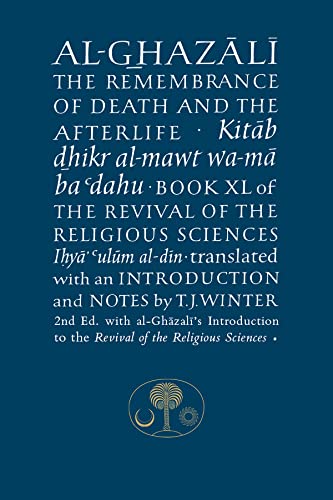
Al-Ghazali and the defense of resurrection: Abu Hamid al-Ghazali (1058–1111) criticized philosophers who interpreted resurrection in ways that appeared to deny its bodily reality. In The Incoherence of the Philosophers, he challenged philosophical positions that conflicted with central Islamic teachings, including the denial of bodily resurrection. Nevertheless, al-Ghazali was not opposed to every form of philosophy or mystical spirituality. His writings integrated theology, ethical discipline, and Sufi spirituality, presenting death as a profound transition in the human relationship with God. In The Remembrance of Death and the Afterlife, part of his Revival of the Religious Sciences, al-Ghazali emphasized preparation for death, moral self-examination, repentance, and the importance of the soul’s condition. For al-Ghazali, the afterlife was both a future reality and an urgent reason for spiritual transformation during earthly life.
Averroes and philosophical interpretations of resurrection: Ibn Rushd, known as Averroes (1126–1198), defended the importance of philosophical reasoning within Islam. He argued that religious revelation communicates truth to people possessing different levels of intellectual understanding. His treatment of resurrection emphasized the importance of religious teachings while raising questions about whether descriptions of the afterlife must always be interpreted in a strictly literal manner. The debate among Avicenna, al-Ghazali, and Averroes became one of the defining controversies of medieval Islamic philosophy.
Historical significance: Between the 9th and 12th centuries, Islamic philosophers developed accounts of the soul and its survival that differed from straightforward literal interpretations of resurrection. The resulting debates helped establish a lasting tension between philosophical immortality and traditional bodily resurrection (Adamson & Taylor, 2005; Smith & Haddad, 2002).
7. Early Sufism and the Mystical Interpretation of Death (8th–12th Centuries)
The emergence of Islamic mysticism: Sufism developed within Islam as a tradition emphasizing purification of the heart, direct awareness of God, spiritual discipline, and the transformation of the self. Sufi teachers generally accepted the Qur’anic framework of resurrection, judgment, Paradise, and Hell. However, many also explored the inward spiritual meanings of these teachings. Rather than treating the afterlife solely as a future event, Sufis frequently emphasized that a person’s spiritual condition during earthly life anticipates the condition experienced after death. This approach did not necessarily reject bodily resurrection. Instead, it added an experiential and mystical dimension to traditional eschatology.
Rabia al-Adawiyya and love of God: Rabia al-Adawiyya (c. 714–801), an early Muslim mystic associated with Basra, became celebrated for her emphasis on loving God without seeking heavenly rewards or fearing punishment. In later Sufi literature, she is associated with the ideal of worshiping God for God’s own sake rather than merely to gain Paradise or avoid Hell. Although the historical authenticity of individual sayings attributed to Rabia is sometimes uncertain, her literary and spiritual legacy represents a significant development in Islamic religious thought. Her example shifted attention from the rewards and punishments of the afterlife toward the spiritual motivation underlying religious devotion.
Al-Hallaj and mystical union: Mansur al-Hallaj (c. 858–922) became one of the most controversial figures in Islamic mysticism. He is remembered for the expression Ana al-Haqq, commonly translated as “I am the Truth,” which has been interpreted in different ways within Sufi thought. His teachings emphasized the transformative experience of divine presence and the surrender of ordinary ego-centered identity. Later Sufis interpreted such experiences through concepts including fana, the annihilation of ego-centered selfhood, and baqaa, continued existence through or in awareness of God. These concepts do not ordinarily mean that the individual literally becomes God. Rather, they concern the transformation of the human relationship with divine reality.
Spiritual death before physical death: A recurring Sufi theme is the importance of undergoing spiritual transformation before bodily death. This teaching is often expressed through the traditional saying “Die before you die,” although its status as an authentic prophetic hadith is disputed. In mystical interpretation, spiritual death involves relinquishing attachment to the ego, worldly desires, and the illusion of independence from God. The person who undergoes such transformation becomes more fully aware of the divine reality that ordinary consciousness often obscures. Physical death may therefore be understood as the removal of limitations that prevent fuller spiritual awareness. This perspective influenced later Sufi interpretations of Barzakh, Paradise, Hell, and the soul’s return to God (Chittick, 2009; Schimmel, 1975).
8. Ibn Arabi and the Spiritual Worlds of the Afterlife (12th–13th Centuries)
The metaphysics of Ibn Arabi: Muhyiddin Ibn Arabi (1165–1240), one of the most influential Islamic mystics and metaphysical thinkers, developed a sophisticated account of existence, consciousness, and the soul’s relationship with God. His writings, particularly The Meccan Revelations (Al-Futuhat al-Makkiyya) and The Bezels of Wisdom (Fusus al-Hikam), explore the relationship between divine reality and the countless forms through which existence becomes manifest. Ibn Arabi is frequently associated with wahdat al-wujud, or the unity of being, although this expression was systematized by later interpreters and requires careful qualification. His thought emphasizes that created beings possess no independent existence apart from God’s creative reality.
Barzakh as an intermediate world: Ibn Arabi expanded the concept of Barzakh beyond the interval between death and resurrection. For him, barzakh could also describe an intermediate reality that simultaneously separates and connects different levels of existence. This concept became associated with the imaginal world, often called alam al-mithal, a level of reality between ordinary material existence and purely intelligible or spiritual existence. The word imaginal is important because this realm was not understood as merely imaginary or unreal. In Ibn Arabi’s metaphysical framework, spiritual realities may appear in forms that possess recognizable qualities without being composed of ordinary physical matter. This provided a way to interpret descriptions of the afterlife as genuine experiences that need not operate according to the same conditions as earthly physical existence.
The soul after death: Within Ibn Arabi’s framework, death transforms the conditions through which human beings experience reality. The soul’s postmortem experiences are connected to its spiritual condition, knowledge, desires, and relationship with God. The imaginal realm offers a conceptual explanation for how spiritual realities may be experienced through forms resembling physical perception. This approach helped later Sufi thinkers discuss visionary experiences, dreams, spiritual encounters, and postmortem existence within a unified metaphysical system.
Divine mercy and the duration of Hell: Ibn Arabi also developed interpretations of divine mercy that became important in later discussions of the ultimate fate of those who enter Hell. Some passages in his writings suggest that punishment and suffering may not remain unchanged forever and that God’s mercy ultimately encompasses all existence. Scholars disagree about the precise implications of his teachings, particularly whether he anticipated the complete cessation of punishment, a transformation of the experience of Hell, or a more complex understanding of divine mercy. His position should therefore not be reduced to a simple claim that he taught universal salvation in the same sense as modern Christian universalism. Nevertheless, his writings provided an important foundation for later Muslim discussions about whether divine punishment must always involve endless suffering.
Historical significance: Ibn Arabi developed a metaphysical interpretation of the afterlife in which spiritual consciousness, imaginal realities, divine self-disclosure, and mercy became central to understanding the soul’s destiny (Chittick, 1989, 2009).
9. Rumi and the Soul’s Spiritual Journey (13th Century)
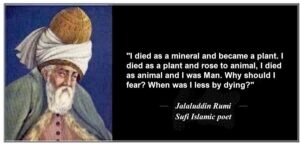
Jalal al-Din Rumi and spiritual transformation: Jalal al-Din Rumi (1207–1273), the Persian Sufi poet and teacher, presented spiritual life as a journey of transformation through divine love. His poetry frequently uses images of death, rebirth, separation, reunion, and the soul’s longing for its divine source. Rumi’s Masnavi and Divan-e Shams-e Tabrizi explore the idea that ordinary human identity is incomplete and that spiritual realization requires a profound transformation of consciousness.
Death as transformation: Rumi frequently portrays death as a transition rather than absolute annihilation. In his mystical poetry, physical death can symbolize the removal of limitations and the movement toward a more complete spiritual existence. His writings also describe successive transformations in nature and human development as images of spiritual ascent. These passages have sometimes been interpreted as suggesting reincarnation or an evolutionary progression through multiple forms of life.
The wedding night – Shab-e Arus: In the Mevlevi Sufi tradition associated with Rumi, the anniversary of his death is commemorated as Shab-e Arus, commonly understood as the Wedding Night. The symbolism portrays death as reunion with the Divine Beloved. Rather than emphasizing death solely as loss, the tradition celebrates the possibility that the soul’s deepest longing is fulfilled through closeness to God. This imagery became one of the most influential expressions of mystical hope within Islamic spirituality.
Historical significance: Rumi helped popularize an interpretation of death centered on divine love, spiritual transformation, and reunion. His writings broadened the emotional and symbolic language through which Muslims could contemplate the afterlife (Chittick, 1983; Schimmel, 1975).
10. Medieval Islamic Eschatology (13th–15th Centuries)
The development of detailed afterlife narratives: By the later medieval period, Islamic literature contained elaborate accounts of the events surrounding death and final judgment. These descriptions were preserved in hadith commentaries, Qur’anic exegesis, devotional manuals, theological writings, and popular religious literature. Accounts frequently included the appearance of the Angel of Death, the departure of the soul, questioning in the grave, experiences in Barzakh, cosmic signs preceding the end of the world, resurrection, judgment, the Sirat Bridge, and entry into Paradise or Hell. These narratives served both theological and educational purposes. They encouraged moral conduct, repentance, religious devotion, and preparation for death. Not every detail possessed the same scriptural authority. Muslim scholars distinguished between Qur’anic teachings, hadith reports of differing reliability, and later devotional elaborations (Lange, 2016).
Al-Qurtubi and the remembrance of death: The Andalusian scholar al-Qurtubi (d. 1273) wrote extensively about the afterlife. His work Al-Tadhkira bi-Ahwal al-Mawta wa-Umur al-Akhira, often called The Reminder, gathered teachings concerning death, the grave, resurrection, judgment, and the conditions of the hereafter. Al-Qurtubi’s approach reflects the medieval effort to organize scriptural and traditional material into a coherent account of humanity’s final destiny. His work also illustrates the close connection between eschatology and religious ethics. The purpose of contemplating death was not simply to acquire information about unseen realities but to transform one’s conduct while alive.
Ibn Taymiyya and Ibn al-Qayyim: Ibn Taymiyya (1263–1328) and his student Ibn al-Qayyim (1292–1350) made significant contributions to Islamic discussions of the soul and the afterlife. Ibn al-Qayyim’s Kitab al-Ruh examines questions concerning the soul, death, the grave, and postmortem existence. Both thinkers strongly affirmed resurrection and divine judgment, but writings associated with them also contributed to debates concerning the duration of Hell and the scope of divine mercy. Some passages attributed to Ibn Taymiyya have been interpreted as suggesting that Hell’s punishment might eventually end. Scholars continue to debate the precise nature and consistency of his position. Ibn al-Qayyim likewise explored arguments concerning divine mercy, the purpose of punishment, and the possibility that punishment might not continue without end. These discussions did not displace the dominant Sunni teaching that Hell is everlasting for those finally condemned to it. They did, however, demonstrate that alternative interpretations existed within medieval Islamic theological debate.
Al-Suyuti and later eschatological literature: Jalal al-Din al-Suyuti (1445–1505) compiled numerous works concerning prophetic traditions, religious history, and the afterlife. His writings contributed to the preservation and organization of narratives concerning death, resurrection, and the unseen world. By the end of the 15th century, Islamic eschatology had developed into an extensive literary and theological tradition extending far beyond the comparatively concise descriptions of the Qur’an.
Historical significance: Medieval scholars consolidated centuries of Islamic teachings into detailed accounts of the afterlife while continuing to debate the nature of the soul, divine punishment, intercession, and the extent of God’s mercy (Lange, 2016; Smith & Haddad, 2002).
11. Shi’a Philosophy and the Imaginal Resurrection (16th–17th Centuries)
The development of Safavid-era philosophy: During the Safavid period in Iran, Shi’a philosophy developed sophisticated interpretations of existence, consciousness, resurrection, and the soul. These traditions drew upon earlier Islamic philosophy, Shi’a theology, and the metaphysical writings of Ibn Arabi and other mystics. An important concern was reconciling the Qur’anic doctrine of bodily resurrection with philosophical arguments for the soul’s immaterial existence.
Mulla Sadra and substantial motion: Sadr al-Din Muhammad Shirazi, commonly known as Mulla Sadra (c. 1571–1640), became one of the most influential philosophers of later Islamic thought. His philosophical system, often called Transcendent Theosophy (al-hikma al-muta’aliya), integrated philosophical reasoning, mystical insight, and religious revelation. A central principle of his philosophy is substantial motion, the idea that material existence undergoes continuous transformation at a fundamental level. Mulla Sadra applied this principle to the development of the human soul. He argued that the soul begins in association with bodily existence but develops toward increasingly spiritual modes of being. This is often summarized through the idea that the soul is bodily in its origination and spiritual in its subsistence.
Resurrection and the imaginal body: Mulla Sadra sought to explain how resurrection could involve genuine embodiment without simply reproducing the physical conditions of earthly life. His philosophy describes the soul as possessing the capacity to manifest forms appropriate to its postmortem condition. The imaginal body is therefore not merely a material body restored through ordinary biological processes. Rather, it is a mode of embodied existence associated with the soul’s developed powers and spiritual condition. This framework allowed Mulla Sadra to interpret resurrection as both real and transformative. His theory remains influential in some contemporary Shi’a philosophical traditions, although it does not represent the only Shi’a understanding of resurrection.
The soul’s spiritual development: Mulla Sadra’s account presents human existence as a process of continuous becoming. The soul is not merely a fixed entity temporarily occupying a physical body. Its faculties and capacities develop through experience, knowledge, and moral action. The afterlife therefore reflects the spiritual condition formed during earthly existence. This interpretation places particular emphasis on the relationship between personal identity, consciousness, moral development, and the reality of resurrection.
Historical significance: Mulla Sadra developed one of the most sophisticated Islamic philosophical accounts of postmortem existence, combining bodily resurrection with a theory of the soul’s spiritual transformation (Rizvi, 2009).
12. Islamic Afterlife Beliefs in the Early Modern Period (17th–18th Centuries)
Continuity and diversity: During the 17th and 18th centuries, Islamic afterlife beliefs continued to develop through scholarly commentaries, Sufi traditions, Shi’a philosophy, and popular religious practices. Across much of the Muslim world, belief in resurrection, judgment, Paradise, and Hell remained fundamental. However, different communities emphasized different aspects of these teachings. Legal scholars and theologians frequently stressed accountability, repentance, and adherence to revelation. Sufi communities emphasized purification, divine love, and spiritual awareness. Philosophical traditions explored the relationship between the soul, consciousness, and higher levels of existence.
Sufi teachings concerning the soul: Sufi orders continued to transmit teachings about spiritual transformation, the remembrance of death, and the soul’s return to God. Dreams, visions, and encounters with deceased saints also appeared in some devotional traditions. Such experiences were generally interpreted within the framework of divine permission and the distinction between the visible and unseen worlds. However, Muslims differed concerning the authority and reliability of visionary experiences. Many scholars warned that dreams and spiritual visions could not override the Qur’an or established religious teachings.
Islamic reform and the afterlife: Reform movements increasingly emphasized the importance of returning to foundational Islamic sources. Some reformers criticized religious practices that they believed placed excessive importance on the intervention of deceased saints or departed spiritual authorities. These disagreements affected attitudes toward visiting graves, seeking blessings, and invoking intercession. Nevertheless, disputes over such practices generally did not involve rejecting the existence of the afterlife itself.
Historical significance: The early modern period preserved the central doctrines of Islamic eschatology while producing continuing disagreements about spiritual authority, mystical experience, and the relationship between the living and the dead.
13. Islamic Modernism and Reinterpretation (19th–Early 20th Centuries)
The encounter with modern science and philosophy: During the 19th century, Muslim intellectuals increasingly confronted European scientific developments, colonial expansion, secular philosophy, and new approaches to religious interpretation. These developments raised questions about the relationship between traditional descriptions of the afterlife and modern understandings of nature. Some thinkers defended literal interpretations of resurrection, Paradise, and Hell. Others emphasized the moral and spiritual meanings of Qur’anic imagery. The resulting debates reflected broader disagreements about scriptural interpretation, religious authority, and the relationship between faith and reason.
Muhammad Abduh and rational theology: Muhammad Abduh (1849–1905), an influential Egyptian reformer, emphasized the compatibility of Islam with rational inquiry. His theological approach encouraged Muslims to distinguish between the essential teachings of revelation and speculative explanations that could not be established with certainty. Although he affirmed the importance of the afterlife, his approach contributed to modern discussions about how descriptions of unseen realities should be understood. Rather than claiming detailed scientific knowledge about the hereafter, rationalist reformers often emphasized the limits of human understanding.
Muhammad Iqbal and personal immortality: Muhammad Iqbal (1877–1938), the South Asian philosopher and poet, developed a distinctive interpretation of the self, spiritual development, and immortality. In The Reconstruction of Religious Thought in Islam, Iqbal emphasized the reality of the individual self and the importance of personal development. He rejected interpretations that reduced spiritual fulfillment to the complete extinction of individuality. For Iqbal, the development of a strong, morally responsible self was essential to understanding humanity’s relationship with God. His interpretation of immortality emphasized continued personal existence and spiritual growth rather than merely the passive enjoyment of heavenly rewards. Iqbal also approached resurrection as a profound transformation whose ultimate nature cannot be fully understood through ordinary physical categories. His writings represent an important modern effort to reconcile Islamic spirituality with philosophical questions about consciousness, freedom, and personal identity (Iqbal, 1930/2013).
The Ahmadiyya interpretation: The Ahmadiyya movement, founded by Mirza Ghulam Ahmad (1835–1908), developed distinctive interpretations of Paradise and Hell. Ahmadiyya writers have frequently emphasized that the rewards and punishments of the afterlife correspond to spiritual conditions developed during earthly life. Within this framework, descriptions of heavenly gardens and hellfire can be understood as representations of deeper spiritual realities. Some Ahmadiyya interpretations also emphasize the corrective or purifying purposes of divine punishment. These interpretations differ from some mainstream Sunni and Shi’a formulations, and the Ahmadiyya movement’s theological claims remain contested by other Muslim communities.
Historical significance: Islamic modernism introduced renewed debates about the literal and symbolic meanings of the afterlife, the nature of personal immortality, and the relationship between revelation and scientific knowledge (Iqbal, 1930/2013; Smith & Haddad, 2002).
14. Contemporary Sunni and Shi’a Beliefs (20th–21st Centuries)
The continuing importance of resurrection: In contemporary Islam, belief in the afterlife remains a central article of faith. Most Sunni and Shi’a Muslims affirm that human beings will be resurrected, judged by God, and assigned a final destiny according to divine justice and mercy. The details of the intermediate state, the nature of resurrection, and the interpretation of heavenly rewards continue to be discussed. Traditional scholars generally maintain that the afterlife is an objective reality rather than merely a psychological metaphor. At the same time, modern Muslim philosophers and theologians explore the relationship between Qur’anic descriptions and the limitations of human language.
The nature of Paradise and Hell: Contemporary Muslim thought includes several approaches to the descriptions of Paradise and Hell. Some scholars emphasize their literal and embodied reality. Others argue that the Qur’an employs imagery understandable to human beings while referring to realities that transcend earthly experience. A third approach combines these perspectives, affirming the reality of the afterlife while acknowledging that its precise nature exceeds human comprehension. Such differences do not necessarily correspond neatly to Sunni-Shi’a divisions. Interpretive diversity exists within both traditions.
Divine mercy and the fate of non-Muslims: One of the most significant contemporary discussions concerns the fate of people who are not Muslims. Traditional Islamic theology developed different approaches to those who rejected Islam knowingly, those who never encountered its message, and those who received an inaccurate or distorted understanding of it. The concept of ahl al-fatrah, commonly associated with people who did not receive an adequate prophetic message, has been important in these debates. Qur’an 17:15 states that God does not punish a people before sending a messenger, while Qur’an 2:62 and 5:69 have generated extensive discussion concerning religious communities and salvation. Some contemporary Muslim scholars emphasize the possibility that divine mercy and justice may encompass people outside the formal boundaries of the Muslim community. Others defend more restrictive interpretations based upon particular readings of Qur’anic passages and hadith traditions. These debates concern the relationship between religious truth, personal responsibility, divine justice, and the limits of human knowledge about another person’s ultimate destiny.
The possibility of universal salvation: The question of universal salvation continues to attract attention among contemporary Muslim thinkers. Some interpretations emphasize Qur’an 7:156, concerning the breadth of divine mercy, and Qur’an 39:53, concerning forgiveness. Others point to Qur’an 11:106–108, where the descriptions of the final destinations include qualifications referring to God’s will. Scholars disagree about whether these passages permit the possibility that all punishment may eventually end. The dominant traditional position has generally maintained that Paradise and Hell are enduring realities and that some forms of condemnation are everlasting. However, the question of whether divine punishment might ultimately be remedial, temporary, or transformed remains an important minority position within Islamic theological discussion.
Death, consciousness, and contemporary spirituality: Modern Muslim discussions also address the relationship between consciousness and the body. Questions concerning dreams, altered states of awareness, near-death experiences (NDEs), and reports of spiritual encounters have attracted interest among some Muslim writers. Such discussions often draw upon Qur’an 39:42, which connects sleep and death through God’s taking of souls. Within Islamic thought, these experiences may be interpreted as potentially meaningful, but they do not possess the same religious authority as the Qur’an.
Historical significance: Contemporary Islamic afterlife beliefs preserve the central teachings of resurrection, judgment, and divine mercy while continuing to engage with philosophical, scientific, and interreligious questions (Smith & Haddad, 2002; Rustomji, 2018).
15. Reincarnation and Islamic Afterlife Beliefs: Historical Perspectives
The mainstream rejection of reincarnation: Reincarnation, known in Arabic as tanasukh, refers to the transmigration of the soul into another earthly body following death. Mainstream Sunni and Twelver Shi’a theology generally rejects reincarnation because Islamic scripture emphasizes one earthly life, death, an intermediate state, and eventual resurrection. Qur’an 23:99–100 describes the dead requesting a return to earthly life but being prevented by a barrier until resurrection. This passage has traditionally been interpreted as evidence against repeated earthly births. Similarly, Qur’an 2:28 describes humanity’s transition from lifelessness to life, death, and restoration to life. Mainstream commentators generally understand this within the framework of creation and resurrection rather than reincarnation.
Reincarnation in minority Islamic and Islamicate traditions: Despite the dominant rejection of reincarnation, ideas involving transmigration appeared in some religious communities historically connected to the Islamic world. Certain early Islamic sectarian movements entertained doctrines of transmigration, although surviving accounts are sometimes preserved through polemical writings by their opponents. The Druze tradition, which emerged in the 11th century from an Isma’ili Shi’a environment and developed into a distinct religious community, teaches the transmigration of souls. Some historical and contemporary interpretations associated with particular Alawite and other esoteric communities have also included forms of transmigration, although beliefs differ and should not be generalized across all members. These traditions demonstrate that reincarnation has appeared within the wider history of religious thought influenced by Islam. However, they do not establish that reincarnation was an accepted teaching of mainstream Islam.
Sufi spiritual rebirth versus reincarnation: Some Sufi writings use the language of repeated death, rebirth, and transformation. In most cases, these expressions concern spiritual development rather than literal reincarnation. The distinction is essential: mystical transformation describes changes in the soul’s condition, whereas reincarnation describes successive lives in different earthly bodies. Consequently, similarities between Sufi poetry and reincarnation traditions should not be treated as proof that major Sufi thinkers systematically taught transmigration.
16. Islamic Afterlife Beliefs and Near-Death Experiences (Late 20th–21st Centuries)
Near-death experiences in Muslim cultural settings: NDEs from Muslim cultural settings sometimes include experiences of light, deceased relatives, spiritual beings, religious figures, or an apparent transition into another realm. Other reports include distressing encounters, judgment-like experiences, or a sense of being returned to earthly life. The interpretation of these experiences depends partly upon the religious and cultural background of the experiencer.
Connections with Barzakh: The Islamic concept of Barzakh provides a possible religious framework for interpreting experiences that appear to occur between ordinary earthly consciousness and a spiritual realm. Reports of encounters with deceased people or unusual environments may be compared with Islamic descriptions of an intermediate state. However, these comparisons are interpretive rather than demonstrative.
Life reviews and divine judgment: Some NDE accounts describe an unusually vivid review of past actions, sometimes accompanied by an awareness of their effects upon others. These experiences can be compared with Qur’anic teachings concerning the recording and disclosure of human deeds. Qur’an 18:49 describes the presentation of a record of actions, while Qur’an 99:7–8 emphasizes accountability for even the smallest deeds. The comparison is meaningful because both involve moral reflection and the consequences of human behavior. Nevertheless, the Qur’anic Day of Judgment is a cosmic event involving resurrection and divine judgment, whereas the life review reported in some NDEs is an individual subjective experience.
Encounters with light: Light is an important symbol in Islamic scripture and spirituality. Qur’an 24:35 famously describes God as the Light of the heavens and the earth, using imagery that has inspired centuries of theological and mystical interpretation. Sufi thinkers have often associated spiritual illumination with knowledge of God, purification, and divine guidance. Experiences of intense light during NDEs may therefore resonate with Islamic mystical symbolism.
The diversity of Muslim NDE reports: Cross-cultural research suggests that NDE reports can share certain recurring features while differing in their imagery, interpretation, and narrative structure. Muslim experiences, such as Iranian NDEs, should therefore not be assumed to reproduce every detail of either Western NDE literature or classical Islamic eschatology. Some experiencers interpret their experiences through Islamic concepts such as divine mercy, angels, judgment, and the soul’s return to God. Others describe experiences that do not fit neatly into established religious categories. The study of Muslim NDEs remains a developing field, and the available research does not justify claims that a single type of experience is universal among Muslims.
Muhammad’s Journey to Heaven: According to Islamic tradition, during his Night Journey and Ascension (Isra and Mi’raj), the Prophet Muhammad traveled through the seven heavens accompanied by the angel Gabriel. Islamic sources state this happened “in the spirit,” his body remaining behind. Muhammad encountered Adam, Jesus, John the Baptist, Joseph, Enoch, Aaron, Moses, and Abraham. He witnessed the magnificent heavenly tree Sidrat al-Muntaha, the celestial sanctuary al-Bayt al-Ma’mur, and the wonders of Paradise, including its inhabitants, angels, and Allah’s immense Throne. He also encountered Malik, the guardian of Hell. Beyond Paradise, Allah commanded fifty daily prayers, later reduced to five following Moses’ advice. Muhammad also learned that good deeds receive multiplied rewards, while evil deeds receive proportionate punishment, emphasizing Allah’s justice and mercy.
Azmina Suleman’s NDE: In her book A Passage to Eternity (2004), Azmina Suleman, a Muslim, described an NDE caused by acute necrotizing pancreatitis in which she entered a multidimensional spiritual realm. In the sixth dimension, as she approached the “Absolute Reality of Divine Light,” she encountered radiant spiritual messengers who appeared to emerge from a single divine source, suggesting their profound unity with God. Among those she identified were Noah, Moses, Jesus, Buddha, Krishna, Muhammad, Hazrat Ali, and the Virgin Mary. Her experience emphasized the spiritual interconnectedness of major religious figures and their shared relationship with the Divine Light.
Amjad Ali Jaffri’s NDE: In 1955, Amjad Ali Jaffri, a Muslim, was participating in an Alpine club expedition in Pakistan when a landside occurred and Jaffri was buried under tons of earth: He stated: “I felt my being escaping, coming out of my body from everywhere. Around me were several beings of light and I was familiar with none of them. Knowing about the events of the life of the Prophet Muhammad, I believed it was either him or Ali ibn Talib or someone else who resembles them. These individuals were communicating with me through telepathy. They were telling me not to worry, and to be calm. They gave me other messages, which we will describe later. I went into a state of total peace… My spiritual existence (soul) was witnessing the chaos from the other side of the mountain… where my body was eventually recovered. When I recounted all that had occurred to the rescue team they were astonished. I told them in great detail what each of them had said, including those that had said ‘forget about him’ and wanted to abandon the search. Despite all of this, they still did not believe me” (Jaffri, 2001).
Historical significance: Contemporary NDE research has introduced new opportunities for comparing Islamic religious teachings with reported experiences near death. These comparisons are potentially valuable for understanding religion and consciousness, but they do not establish the objective existence or precise structure of the Islamic afterlife.
17. Summary Timeline of Islamic Afterlife Beliefs
Before 610 CE – Diverse Arabian beliefs about death coexist with Jewish, Christian, and Iranian traditions of resurrection and judgment.
610–632 CE – Qur’anic revelations establish resurrection, divine judgment, Paradise, Hell, and God’s mercy.
7th–9th centuries – Hadith traditions expand teachings concerning Barzakh, grave questioning, intercession, and the Sirat Bridge.
8th–11th centuries – Mu’tazilite, Ash’arite, and Maturidite theologians debate divine justice, free will, punishment, and resurrection.
9th–12th centuries – Al-Kindi, al-Farabi, Avicenna, al-Ghazali, and Averroes explore immortality and bodily resurrection.
8th–12th centuries – Early Sufism develops mystical interpretations of death, divine love, and spiritual transformation.
12th–13th centuries – Ibn Arabi develops metaphysical interpretations of Barzakh, imaginal existence, and divine mercy.
13th century – Rumi emphasizes death as spiritual transformation and reunion with the Divine Beloved.
13th–15th centuries – Medieval scholars systematize detailed narratives of death, judgment, Paradise, and Hell.
16th–17th centuries – Mulla Sadra develops a philosophical theory of the soul’s transformation and imaginal embodiment.
17th–18th centuries – Sufi, theological, and reform traditions continue to interpret established afterlife doctrines.
19th–early 20th centuries – Islamic modernists and philosophers reconsider resurrection and immortality in relation to reason and modern thought.
20th–21st centuries – Contemporary scholars debate literal and symbolic interpretation, salvation, divine mercy, and consciousness.
18. Conclusion
The history of Islamic afterlife beliefs reveals a rich and evolving tradition that has developed over more than fourteen centuries while preserving a consistent foundation in the Qur’anic teachings of death, resurrection, divine judgment, Paradise, Hell, and the ultimate return of humanity to God. Beginning in the 7th century, the Qur’an established the afterlife as an essential dimension of human existence, emphasizing that earthly actions possess lasting moral significance and that divine justice and mercy will ultimately prevail. During the 7th through 9th centuries, hadith traditions expanded these teachings through descriptions of the intermediate state of Barzakh, questioning in the grave, intercession, and the events preceding final judgment.
Beginning in the 8th century, Islamic theologians developed increasingly sophisticated explanations of divine justice, free will, bodily resurrection, and eternal punishment. From the 9th through 12th centuries, philosophers such as Avicenna, al-Ghazali, and Averroes debated the relationship between the immortal soul and the resurrected body, while Sufi mystics explored death as a process of spiritual transformation. During the 12th and 13th centuries, Ibn Arabi and Rumi emphasized the soul’s relationship with divine reality, interpreting the afterlife through concepts of spiritual consciousness, love, and the return to God. Later thinkers, particularly Mulla Sadra in the 17th century, developed philosophical accounts of resurrection involving the soul’s transformation and the possibility of an imaginal form of embodiment.
Beginning in the 19th century, Muslim intellectuals increasingly reconsidered traditional afterlife teachings in relation to modern science, philosophy, and changing understandings of human consciousness. Contemporary Islamic thought continues to explore the nature of Paradise and Hell, the fate of non-Muslims, the duration of divine punishment, and the relationship between religious revelation and reported experiences near death. Although mainstream Islam generally rejects reincarnation and maintains the reality of resurrection and judgment, minority religious and philosophical traditions have introduced alternative interpretations of the soul’s destiny.
Taken together, these developments demonstrate that Islamic afterlife beliefs cannot be reduced to a single, unchanging description of heaven and hell. Rather, they encompass scriptural teachings, theological debates, philosophical interpretations, and mystical understandings of the soul’s relationship with God. Throughout this diversity, the central conviction remains that human existence possesses a purpose extending beyond physical death and that the ultimate destiny of every person rests within the knowledge, justice, and mercy of God.
19. References
Primary Islamic sources
The Qur’an. (7th century). The Qur’an (M. A. S. Abdel Haleem, Trans.). Oxford University Press, 2004.
Al-Bukhari, M. ibn I. (9th century). Sahih al-Bukhari. Collection of prophetic traditions, including teachings concerning death, resurrection, and judgment.
Muslim ibn al-Hajjaj. (9th century). Sahih Muslim. Collection of prophetic traditions, including descriptions of the grave and the hereafter.
Al-Ghazali, A. H. (2006). The remembrance of death and the afterlife: Book XL of the Revival of the Religious Sciences (T. J. Winter, Trans.). Islamic Texts Society.
Iqbal, M. (1930). The reconstruction of religious thought in Islam.
Modern academic references
Adamson, P., & Taylor, R. C. (Eds.). (2005). The Cambridge companion to Arabic philosophy. Cambridge University Press. https://doi.org/10.1017/CCOL0521817439
Akbar, A. (2019). The Zoroastrian provenance of some Islamic eschatological doctrines. Studies in Religion/Sciences Religieuses. https://doi.org/10.1177/0008429819844499
Chittick, W. C. (1983). The Sufi path of love: The spiritual teachings of Rumi. State University of New York Press.
Chittick, W. C. (1989). The Sufi path of knowledge: Ibn al-‘Arabi’s metaphysics of imagination. State University of New York Press.
Chittick, W. C. (2009). Muslim eschatology. In The Oxford handbook of eschatology (pp. 132–150). Oxford University Press. https://doi.org/10.1093/oxfordhb/9780195170498.003.8
Günther, S. (2020). Eschatology and the Qur’an. The Oxford handbook of Qur’anic studies. Oxford University Press.
Hasse, D. N. (2000). Avicenna’s De anima in the Latin West: The formation of a peripatetic philosophy of the soul, 1160–1300. Warburg Institute.
Jaffri, A. A. (2001, June). Al Balagh.
Lange, C. (2016). Paradise and Hell in Islamic traditions. Cambridge University Press. https://doi.org/10.1017/CBO9781139014847
Rizvi, S. H. (2009). Mulla Sadra and metaphysics: Modulation of being. Routledge.
Rustomji, N. (2018). Afterlife, heaven, hell. Oxford Bibliographies in Islamic Studies. Oxford University Press. https://doi.org/10.1093/obo/9780195390155-0255
Schimmel, A. (1975). Mystical dimensions of Islam. University of North Carolina Press.
Smith, J. I., & Haddad, Y. Y. (2002). The Islamic understanding of death and resurrection. Oxford University Press. https://doi.org/10.1093/0195156498.001.0001
Suleman, A. (2004). A passage to eternity. Amethyst Publishing.
Tesei, T. (2016). The barzakh and the intermediate state of the dead in the Qur’an. In C. Lange (Ed.), Locating Hell in Islamic traditions (pp. 31–55). Brill. https://www.jstor.org/stable/10.1163/j.ctt1w8h1w3.8