This site uses affiliate links to Amazon.com Books for which IANDS can earn an affiliate commission if you click on those links and make purchases through them.
1. Introduction to LSD and NDEs
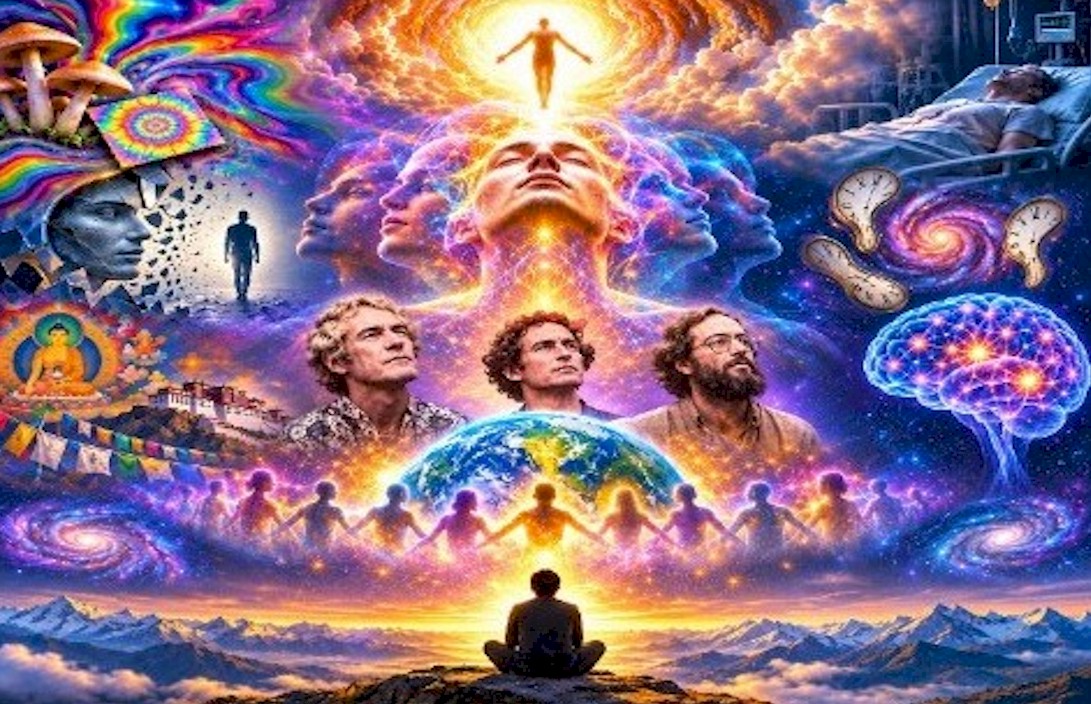
Near-death experiences (NDEs) and the psychedelic effects of LSD (lysergic acid diethylamide) share fascinating parallels that have intrigued researchers, spiritual seekers, and psychologists for decades. Both experiences are often described as transformative, offering profound insights into the nature of consciousness, life, and death. Individuals who have undergone an NDE frequently report vivid visions, a sense of unity with the universe, out-of-body experiences, and encounters with a bright, loving light. Similarly, those who take LSD often describe feelings of ego dissolution, spiritual awakening, and altered perceptions of time and space.

The connection between LSD and NDEs is more than just a superficial resemblance. In the 1960s, researchers led by Timothy Leary began studying the potential for psychedelics like LSD to induce experiences similar to NDEs, suggesting that both could offer glimpses into the same transcendent states of consciousness. These altered states—whether through near-death or the effects of LSD—often leave lasting impressions on individuals, with many emerging from the experience with a reduced fear of death, a heightened sense of purpose, and a deepened spiritual understanding.
This introduction sets the stage for a deeper exploration into the similarities between LSD experiences and near-death phenomena. Both challenge the limits of ordinary consciousness and offer insight into what may lie beyond our immediate perception of reality, pushing the boundaries of human experience and our understanding of existence.
2. An Introduction to the Psychedelic Experience Based Upon the Tibetan Book of the Dead
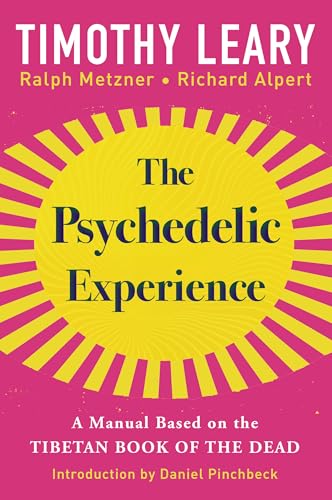
The following is an excerpt from Ralph Metzner‘s excellent book, The Psychedelic Experience. It is based on the Tibetan Book of the Dead and co-authored by the late Timothy Leary.
A psychedelic experience is a journey to new realms of consciousness. The scope and content of the experience is limitless, but its characteristic features are the transcendence of verbal concepts, of space-time dimensions, and of the ego or identity. Such experiences of enlarged consciousness can occur in a variety of ways: sensory deprivation, yoga exercises, disciplined meditation, religious or aesthetic ecstasies, or spontaneously. Most recently they have become available to anyone through the ingestion of psychedelic drugs such as LSD, psilocybin, mescaline, DMT, etc.
Of course, the drug does not produce the transcendent experience. It merely acts as a chemical key – it opens the mind, frees the nervous system of its ordinary patterns and structures. The nature of the experience depends almost entirely on set and setting. Set denotes the preparation of the individual, including his personality structure and his mood at the time. Setting is physical – the weather, the room’s atmosphere; social – feelings of persons present towards one another; and cultural – prevailing views as to what is real. It is for this reason that manuals or guide-books are necessary. Their purpose is to enable a person to understand the new realities of the expanded consciousness, to serve as road maps for new interior territories which modern science has made accessible.
Different explorers draw different maps. Other manuals are to be written based on different models – scientific, aesthetic, therapeutic. The Tibetan model is designed to teach the person to direct and control awareness in such a way as to reach that level of understanding variously called liberation, illumination, or enlightenment. If the manual is read several times before a session is attempted, and if a trusted person is there to remind and refresh the memory of the voyager during the experience, the consciousness will be freed from the games which comprise “personality” and from positive-negative hallucinations which often accompany states of expanded awareness. The Tibetan Book of the Dead was called in its own language the Bardo Thodol, which means Liberation by Hearing on the After-Death Realm. The book stresses over and over that the free consciousness has only to hear and remember the teachings in order to be liberated.
The Tibetan Book of the Dead is ostensibly a book describing the experiences to be expected at the moment of death, during an intermediate phase lasting forty-nine days, and during rebirth into another bodily frame. This however is merely the esoteric framework which the Tibetan Buddhists used to cloak their mystical teachings. The language and symbolism of death rituals of Bonism, the traditional pre-Buddhist Tibetan religion, were skillfully blended with Buddhist conceptions. The esoteric meaning is that it is death and rebirth of the ego that is described, not of the body.
Tibetan lama Govinda indicates this clearly in his introduction when he writes: “It is a book for the living as well as for the dying.”
The book’s esoteric meaning is often concealed beneath many layers of symbolism. It was not intended for general reading. It was designed to be understood only by one who was to be initiated personally by a guru into the Buddhist mystical doctrines, into the pre-mortem-death-rebirth experience. These doctrines have been kept a closely guarded secret for many centuries, for fear that naive or careless application would do harm. In publishing this practical interpretation for use in the psychedelic drug session, we are in a sense breaking with the tradition of secrecy and thus contravening the teachings of the lama-gurus.
Following the Tibetan model then, we distinguish three phases of the psychedelic experience. The first period is that of complete transcendence – beyond words, beyond space-time, beyond self. There are no visions, no sense of self, no thoughts. There are only pure awareness and ecstatic freedom from all game (i.e., role playing) and biological involvements. The second lengthy period involves self, or external game reality – in sharp exquisite clarity or in the form of hallucinations (karmic apparitions). The final period involves the return to routine game reality and the self. For most persons the second (aesthetic or hallucinatory) stage is the longest. For the initiated the first stage of illumination lasts longer. For the unprepared, the heavy game players, those who anxiously cling to their egos, and for those who take the drug in a non-supportive setting, the struggle to regain reality begins early and usually lasts to the end of their session.
Words like these are static, whereas the psychedelic experience is fluid and ever-changing. Typically the subject’s consciousness flicks in and out of these three levels with rapid oscillations. One purpose of this manual is to enable the person to regain the transcendence of the first period and to avoid the prolonged entrapments in hallucinatory or ego-dominated game patterns.
You must be ready to accept the possibility that there is a limitless range of awareness for which we now have no words; that awareness can expand beyond the range of your ego, your self, your familiar identity, beyond everything you have learned, beyond your notions of space and time, beyond the differences which usually separate people from each other and from the world around them.
You must remember that throughout human history, millions have made this voyage. A few (whom we call mystics, saints or Buddhas) have made this experience endure and have communicated it to their fellow men. You must remember, too, that the experience is safe (at the very worst, you will end up the same person who entered the experience), and that all of the dangers which you have feared are unnecessary productions of your mind. Whether you experience heaven or hell, remember that it is your mind which creates them. Avoid grasping the one or fleeing the other. Avoid imposing the ego game on the experience.
You must try to maintain faith and trust in the potentiality of your own brain and the billion year old life process. With your ego left behind you, the brain can’t go wrong.
3. The Stages of the Psychedelic Experience
The first stage: Transcendence and the Clear Light
The first stage involves the dissolution of ordinary identity and the possible experience of pure consciousness beyond thoughts, memories, and personal distinctions. Leary and Metzner associated this state with the Tibetan Buddhist concept of the Clear Light, a fundamental luminosity of awareness encountered in certain descriptions of the dying process. In this state, the individual may experience complete freedom from personal identity, an absence of ordinary time and space, and an overwhelming sense of unity. This resembles reports from NDErs who describe merging with a brilliant light that seems to possess infinite intelligence, unconditional love, and a profound sense of ultimate reality. In Tibetan Buddhist teachings, the Clear Light is associated with the recognition of the fundamental nature of mind.
The second stage: Visions and symbolic realities
The second stage involves the appearance of extraordinary visions, spiritual figures, symbolic landscapes, and emotionally powerful experiences. Leary and Metzner compared this phase to the visionary states described in the Bardo Thodol, in which peaceful and wrathful deities may appear to consciousness. During LSD experiences, individuals sometimes encounter luminous beings, elaborate geometric patterns, seemingly sacred landscapes, or frightening entities. Such visions may be interpreted as manifestations of unconscious psychological material, religious symbolism, or apparently independent spiritual realities. Comparable phenomena occur in NDEs, where individuals sometimes describe encountering angels, deceased relatives, religious figures, a Being of Light, or unfamiliar beings. The important similarity is that both experiences may produce an overwhelming conviction that the encountered reality is more fundamental than ordinary physical existence. Nevertheless, the content of these visions can be influenced by personal expectations, religious beliefs, cultural background, and the conditions surrounding the experience.
The third stage: Return and reintegration
The final stage involves the gradual return of ordinary identity and awareness. In the psychedelic experience, the individual begins to recognize the familiar boundaries of personality, personal memories, and physical surroundings. Leary and Metzner compared this process to the movement toward rebirth described in Tibetan Buddhist teachings. A similar transition appears in many NDE accounts. Individuals may describe being told that their time has not yet come, choosing to return to earthly life, or suddenly finding themselves back inside their physical bodies. In both cases, returning to ordinary consciousness can be emotionally difficult. Some individuals feel reluctant to leave the transcendent state because it seemed more peaceful, meaningful, or real than everyday existence. The challenge then becomes integrating the experience into ordinary life. This comparison is especially significant because both NDEs and psychedelic experiences can produce lasting changes in personal values, spiritual beliefs, relationships, and attitudes toward death.
4. Ego Death and the Discovery of a Greater Self
Perhaps the most important connection between LSD experiences and NDEs involves the temporary dissolution of the ego. In ordinary waking consciousness, individuals generally experience themselves as separate beings possessing distinct personalities, memories, bodies, and personal histories. This sense of identity provides the foundation for everyday experience. During profound altered states, however, this familiar identity may temporarily disappear. In psychedelic research, ego dissolution refers to the weakening or disappearance of the perceived boundary between the self and the external world. Individuals may no longer experience themselves as isolated observers confronting an independent universe. Instead, they may feel that their consciousness has expanded to encompass everything.
Some NDErs describe a similar transformation, often experienced in the Void, in which they report that their earthly personality was only a temporary expression of a much greater spiritual identity. For example, NDE accounts sometimes include the realization that the physical body is merely a vehicle for consciousness and that the deeper self exists independently of earthly circumstances. This resembles certain psychedelic reports in which individuals feel that their ordinary identity is an illusion concealing a universal consciousness. The similarity is especially striking when compared with mystical traditions that teach that the apparent separation between the individual and ultimate reality is not absolute.
In Hindu Advaita Vedanta, for example, the deepest self, or Atman, is understood as ultimately identical with Brahman, the absolute reality. In certain Buddhist traditions, liberation involves recognizing the empty and interdependent nature of the self. Although these traditions differ philosophically, both provide conceptual frameworks for understanding experiences in which ordinary individuality temporarily disappears.
5. The Experience of the Light and Universal Consciousness
One of the most frequently discussed features of NDEs is the encounter with an extraordinary light. NDErs often describe this light as possessing qualities far beyond ordinary physical illumination. It may appear infinitely brilliant without causing discomfort, radiate unconditional love, communicate directly through thought, and seem to contain limitless knowledge. Some individuals identify the light with God, Jesus, or another divine presence. Others interpret it as universal consciousness or the fundamental source of existence.
Profound psychedelic experiences can contain comparable descriptions. Under LSD, individuals sometimes report encountering radiant luminosity, experiencing a sense of sacred presence, or dissolving into what seems to be an infinite field of awareness. In both experiences, the light may symbolize more than visual perception. It can represent the disappearance of separation between the individual and a perceived ultimate reality.
This is particularly relevant to the Tibetan Buddhist concept of the Clear Light, which represents the luminous nature of awareness rather than an ordinary physical object. A spiritual interpretation suggests that both NDEs and psychedelic experiences may occasionally provide access to a transcendent dimension of consciousness.
6. Timelessness, Expanded Knowledge, and the Life Review
Another remarkable parallel concerns the alteration of time and the apparent expansion of knowledge. During NDEs, individuals sometimes describe experiencing their entire lives simultaneously rather than remembering events in chronological order. The life review may involve revisiting important events while experiencing the emotions of other people affected by one’s actions. Some NDErs report understanding the consequences of their behavior with extraordinary clarity, leading to profound moral and emotional insights.
LSD experiences can also involve vivid autobiographical memories, altered perceptions of time, and powerful emotional reassessments of personal relationships. Individuals may feel that they have gained a panoramic understanding of their lives or recognized patterns of behavior that previously escaped their awareness. However, these experiences are not identical. The comprehensive, morally oriented life review described in some NDEs is not a universal or defining feature of LSD experiences. Both nevertheless suggest that ordinary autobiographical consciousness can undergo dramatic reorganization.
Experiences that seem to contain years of information may occur within a relatively short period of clock time. Likewise, individuals may describe receiving knowledge instantaneously, without the sequential reasoning normally required for learning. Such reports raise important questions about the relationship between subjective time, memory, and consciousness. They also demonstrate why extraordinary experiences can remain psychologically significant for decades, even when their metaphysical interpretations remain uncertain.
7. Heaven, Hell, and Distressing Experiences
Not all NDEs or psychedelic experiences are peaceful or uplifting. Some NDErs report terrifying darkness, isolation, threatening entities, feelings of judgment, or environments interpreted as hellish. Similarly, LSD can produce intense fear, paranoia, confusion, frightening visions, and a sense of psychological disintegration. Leary and Metzner interpreted some frightening psychedelic experiences through the Tibetan Buddhist framework of wrathful deities and karmic visions. In this interpretation, terrifying appearances are not necessarily independent evil beings. They may represent manifestations of the mind that become frightening when the individual resists the dissolution of the ego. This resembles certain Buddhist teachings in which the recognition of visionary appearances as manifestations of awareness is associated with liberation from fear.
A similar interpretation has sometimes been applied to distressing NDEs. For example, some individuals describe moving from fear or darkness into peace after surrendering, praying, or abandoning resistance. However, it would be misleading to suggest that all frightening NDEs or psychedelic experiences result from ego attachment. Their causes are not fully understood, and many occur without any identifiable psychological resistance. Moreover, LSD experiences can sometimes produce severe anxiety, panic, dangerous behavior, or prolonged psychiatric complications in vulnerable individuals. The comparison nevertheless raises an interesting possibility: the individual’s emotional response, expectations, and interpretation may significantly influence how extraordinary states of consciousness unfold.
8. The Lasting Aftereffects of LSD and NDEs
One of the strongest similarities between NDEs and profound psychedelic experiences concerns their long-term psychological and spiritual consequences. Researchers have documented enduring changes following both types of experience, although outcomes vary considerably. Some individuals report reduced fear of death, increased appreciation for life, greater compassion, a heightened sense of interconnectedness, and a diminished attachment to material possessions. NDE researchers such as Kenneth Ring and Bruce Greyson have examined the lasting psychological and spiritual changes reported by NDErs. Similarly, modern psychedelic research has found that carefully supported psychedelic experiences can produce lasting changes in attitudes, personal meaning, and psychological well-being.
One particularly important area involves the fear of death. Some individuals who experience an NDE return convinced that consciousness continues after bodily death. This conviction can substantially reduce their fear of dying. Psychedelic experiences may also reduce death-related anxiety, particularly when individuals undergo profound mystical-type experiences characterized by unity, sacredness, and transcendence. Research involving LSD and other psychedelics has explored their potential effects on existential distress in people facing life-threatening illnesses. For example, a small randomized study by Gasser and colleagues (2014) investigated LSD-assisted psychotherapy for anxiety associated with life-threatening diseases. The findings were promising but preliminary because the study involved a limited number of participants. Later research involving psilocybin, a different psychedelic substance, has provided additional evidence that psychedelic-assisted therapy may reduce depression, anxiety, and existential distress in selected patients with cancer.
9. Can LSD Experiences Explain Near-Death Experiences?
The similarities between LSD experiences and NDEs raise a major scientific and philosophical question: Are NDEs the result of unusual brain activity, or do they reveal consciousness operating beyond its ordinary physical limitations? One explanation proposes that both experiences involve changes in neural systems responsible for self-awareness, sensory integration, emotional processing, and the construction of reality. LSD produces its effects largely through serotonin 5-HT2A receptor activity, altering communication across brain networks and affecting perception, cognition, and the sense of self.
NDEs, by contrast, occur under widely varying conditions. Some happen during cardiac arrest or other serious physiological crises, while others occur during situations involving perceived danger without a documented loss of brain function. Possible physiological contributors include altered oxygen availability, changes in carbon dioxide levels, neurotransmitter activity, disrupted sensory integration, and unusual patterns of brain activity. No single mechanism has been established that explains all NDE features.
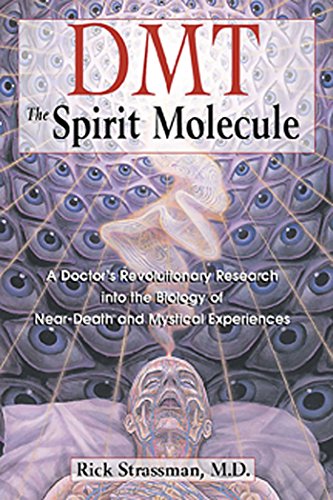
The resemblance between psychedelic states and NDEs therefore provides valuable clues but does not establish that they arise through identical mechanisms. Furthermore, LSD is not known to reproduce the complete range of NDE phenomena reliably. Some NDE features, such as detailed life reviews, encounters with deceased relatives, and perceptions of events occurring during medical emergencies, are not consistently reproduced by LSD. Researchers have also compared NDEs with experiences induced by other substances, especially ketamine and DMT. These comparisons sometimes reveal substantial phenomenological overlap, but findings concerning those substances should not automatically be attributed to LSD.
From a spiritual perspective, some interpret the similarities as suggesting that the brain ordinarily restricts awareness to the requirements of physical existence. Under extraordinary conditions, these restrictions might loosen, allowing consciousness to experience a wider reality. This resembles the philosophical idea of the brain as a filter or reducing mechanism, an interpretation associated with thinkers such as William James and later Aldous Huxley.
Further Reading:
— Larry Hagman’s LSD and Near-Death Experience
10. Conclusion: Different Pathways to Transcendent Consciousness
The relationship between LSD experiences and NDEs offers a fascinating perspective on the mysteries of human consciousness. Both can involve ego dissolution, altered perceptions of time and space, encounters with extraordinary light, feelings of universal unity, and profound spiritual transformation. Both may leave individuals convinced that ordinary waking consciousness reveals only a limited portion of reality.
The work of Timothy Leary, Ralph Metzner, and Richard Alpert was historically important because it connected modern psychedelic experiences with ancient Tibetan Buddhist teachings about death, consciousness, and liberation. Their interpretation suggested that the psychological death of the ego could resemble aspects of the spiritual journey traditionally associated with physical death. Modern neuroscience has added another dimension to this comparison by demonstrating that psychedelic substances can profoundly alter the brain networks involved in personal identity and the perception of reality.
Yet important questions remain unresolved. If LSD and NDEs sometimes produce similar experiences, does this indicate that the brain possesses the capacity to generate extraordinary spiritual realities? Or might these altered states provide glimpses of dimensions of consciousness normally inaccessible to everyday awareness? The available evidence does not conclusively establish either possibility. What is clear is that both NDEs and psychedelic experiences can challenge deeply held assumptions about identity, reality, and death. Their enduring psychological effects demonstrate that even temporary changes in consciousness can permanently transform an individual’s understanding of existence.
Ultimately, the study of LSD and NDEs brings together neuroscience, psychology, philosophy, and spirituality in the search for answers to one of humanity’s oldest questions: Is consciousness entirely a product of the physical brain, or does it represent something more fundamental about reality itself?
11. References
Carhart-Harris, R. L., et al. (2016). Neural correlates of the LSD experience revealed by multimodal neuroimaging. Proceedings of the National Academy of Sciences, 113(17), 4853–4858. https://doi.org/10.1073/pnas.1518377113.
Gasser, P., Holstein, D., Michel, Y., Doblin, R., Yazar-Klosinski, B., Passie, T., & Brenneisen, R. (2014). Safety and efficacy of lysergic acid diethylamide-assisted psychotherapy for anxiety associated with life-threatening diseases. The Journal of Nervous and Mental Disease, 202(7), 513–520. https://doi.org/10.1097/NMD.0000000000000113.
Greyson, B. (1983). The near-death experience scale: Construction, reliability, and validity. The Journal of Nervous and Mental Disease, 171(6), 369–375. https://doi.org/10.1097/00005053-198306000-00007.
Greyson, B. (2021). After: A doctor explores what near-death experiences reveal about life and beyond. St. Martin’s Essentials.
Griffiths, R. R., et al. (2016). Psilocybin produces substantial and sustained decreases in depression and anxiety in patients with life-threatening cancer: A randomized double-blind trial. Journal of Psychopharmacology, 30(12), 1181–1197. https://doi.org/10.1177/0269881116675513.
Leary, T., Metzner, R., & Alpert, R. (1964). The psychedelic experience: A manual based on the Tibetan book of the dead. University Books.
Martial, C., et al. (2019). Neurochemical models of near-death experiences: A large-scale study based on the semantic similarity of written reports. Consciousness and Cognition, 69, 52–69. https://doi.org/10.1016/j.concog.2019.01.011.
Ring, K. (1980). Life at death: A scientific investigation of the near-death experience. Coward, McCann & Geoghegan.
Timmermann, C., et al. (2018). DMT models the near-death experience. Frontiers in Psychology, 9, 1424. https://doi.org/10.3389/fpsyg.2018.01424.