This site uses affiliate links to Amazon.com Books for which IANDS can earn an affiliate commission if you click on those links and make purchases through them.
1. Introduction to Carl Jung and the NDE
The world-renowned psychiatrist Carl G. Jung (1875-1961) did not develop his psychological theories of analytical psychology solely from clinical observation or abstract philosophy, although Jung is widely known as one of the founders of depth psychology. Some of Jung’s most influential ideas – especially the concept of archetypes – were forged through direct visionary experiences including a near-death experience (NDE). Jung himself acknowledged that his experience permanently altered his understanding of consciousness, life, and death. He described an encounter with overwhelming light, a sense of existing outside time, and a vision of reality that felt more real than ordinary life. Jung insisted this experience was not imagined, but was a direct encounter with a deeper level of reality.
Jung’s NDE became an important base for his later work. It helped confirm his belief that the mind is not limited to the brain. He believed awareness goes beyond the ego, or everyday sense of self. He also believed that images of light, wholeness, judgment, and psychological rebirth come from deep layers of the mind that all humans share. When we compare his ideas with modern NDE research, Jung’s psychology helps explain why these experiences feel so similar across cultures. It also helps explain why they feel meaningful and often change people’s lives. Instead of brushing NDEs off as hallucinations or personal beliefs, Jung saw them as real inner experiences. He believed they come from deep mental structures that shape how people find meaning, make moral choices, and experience profound aftereffects when facing death.
2. Carl Jung’s Near-Death Experience
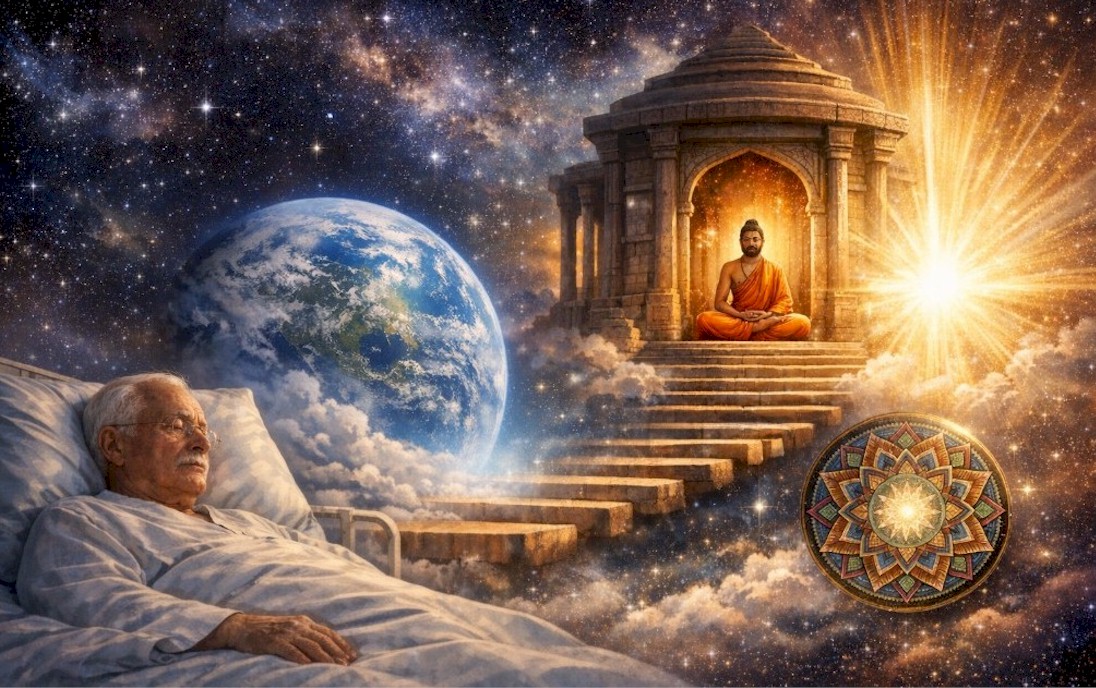
 In 1944, Jung was in a hospital in Switzerland when he had a heart attack leading to him having an NDE. He later said the bright light he encountered, and the deep meaning of what he learned, felt completely real and timeless. To him, it did not feel imagined. Jung’s NDE was unusual because he saw the Earth from far above it, about a thousand miles up. He described the planet exactly as it would later be seen by astronauts, even though this was many years before space travel. He said it was the most beautiful thing he had ever seen. The sight filled him with awe and made him feel as if he had left ordinary life behind. Jung believed the Earth represented the Mother archetype. In his psychology, this archetype is one of the most basic patterns in the human mind. It stands for beginnings, safety, nourishment, protection, and change.
Jung remembered encountering a meditating Hindu figure during his NDE. He understood this figure as a symbol of the Higher Self, or the image of God within the human mind. Jung focused on archetypes from what he called the collective unconscious. What follows is a retelling of his NDE based on his autobiography, Memories, Dreams, Reflections.
During his NDE, Jung had a series of powerful visions that made him certain he was dying. He saw a huge stone building in heaven that looked like a temple. A meditating Hindu sat quietly nearby. Jung felt that all his earthly wants, goals, and false ideas were being stripped away. The process was painful, but also freeing. What remained was the full story of his life, seen clearly as a complete whole. Jung felt sure that if he entered the temple, he would fully understand the meaning of his life and how it fit into a larger spiritual story.
Just before he could enter, he saw a vision of his doctor, who was still alive at the time. The doctor appeared in a strange, ancient form as an “avatar“. His doctor told Jung that he could not die yet and had to return to life. Jung believed the doctor’s ancient appearance meant the doctor himself would soon die. This upset him deeply, and he tried to warn the man, but failed. Later, Jung learned that his doctor did become sick and died soon after from a serious infection. When his NDE ended, Jung felt crushed and did not want to return to everyday life. Many people who have NDEs report seeing living people in the afterlife, which is understood as encountering the living person’s soul. Read more information on NDE encounters with living people in heaven.
While recovering from his NDE, Jung’s moods shifted sharply. During the day, he felt trapped and miserable. He described normal life as being stuck in a small box, where people sit alone inside rooms which he called “the box system.” Compared to the freedom he felt while floating in space, everyday life felt heavy and meaningless. At night, his dreams were very different. He felt surrounded by a timeless world filled with sacred images from religious and mystical traditions. These dreams brought intense joy, a feeling of unity, and a sense of being whole forever. Over time, these visions slowly faded as he returned fully to normal life.
Jung believed his NDE was real and not imagined. He said they existed outside of time, where past, present, and future all existed at once. Later, he saw this as a sign of deep psychological growth, where a person is no longer ruled by emotional attachments or projections. After his NDE, Jung entered one of the most productive periods of his life. He wrote many of his most important works. The experience helped him accept life as it is, including uncertainty and mistakes. He came to believe that true inner wholeness means accepting one’s inner experiences as they come and embracing destiny instead of trying to control or escape it.
3. Carl Jung’s Analytical Psychology
Analytical psychology is the approach to psychology created by Carl Jung. He developed it to make it different from the ideas of Sigmund Freud. At first, Jung focused on psychological “complexes,” which are strong emotional patterns in the mind. After he broke away from Freud, Jung’s work changed direction. He began to study archetypes, the unconscious, and how these shape human life. He also developed analytical psychology into a form of therapy.
Analytical psychology became a major influence in psychology and in other fields as well. According to Jung, the main goal of life is to fully become who you truly are. Along with others, Jung called this process individuation. Individuation means developing the “Self” as completely as possible. Jung described the Self as both the center and the whole of the personality. It includes what we are aware of and what we are not aware of. The ego, by contrast, is only the center of our conscious thoughts.
Jung’s ideas about the mind have strong parallels with NDEs. Jung studied the psyche through depth psychology, while NDEs happen during moments close to death. Even so, both describe deep changes in identity. Both involve powerful symbols and encounters with something beyond the personal self. Together, they offer two ways of understanding consciousness at its deepest level. Beneath the everyday personality we show the world, there is a deeper level of mind. This deeper level seeks wholeness, meaning, and inner balance. Ego loss, encounters with light or a sense of totality, symbolic images, and long-lasting personal change all suggest a mind that moves toward unity, not division. Seen this way, Jung’s psychology offers a symbolic map for understanding NDEs, while NDEs bring to life many of the realities Jung studied for decades.
Analytical psychology describes the psyche as having many layers. Jung suggested that at the deepest level, the mind and reality may not be separate. This idea closely matches NDE reports in which people describe merging with a greater whole or universal consciousness. Both Jung’s work and NDEs involve ego loss and expanded awareness. Jung noticed that deep psychological or spiritual experiences often weaken the ego for a time. When this happens, deeper contents of the mind can come forward. Jung’s archetypes are shared patterns that shape how humans experience and understand life. These same patterns show up clearly in many NDE testimonies. Jung saw such experiences as symbolic encounters with real structures of the psyche. This fits with how NDErs often say their experiences felt more real than real, and more real than dreams or imagination.
Jung believed the psyche speaks through symbols, especially when ordinary language is not enough. Images like mandalas, brilliant light, and spiritual journeys appear both in Jung’s patients’ visions and in NDE reports. Some common symbols appear again and again. Light often represents wholeness, truth, or ultimate reality. Journeys often represent a shift from one state of being to another. Different realms often represent ways consciousness is organized. Both Jungian analysis and NDE research suggest that these symbols come from deep structures of the mind.
Jung defined individuation as a lifelong process of becoming psychologically whole. This happens by bringing together conscious and unconscious parts of the self into a balanced whole. NDEs often seem to start this process. NDErs frequently report deep changes. They often feel more compassion and find greater meaning in life. Many lose much of their fear of death. Many also feel a strong sense of purpose or mission. Jung observed similar changes in people who had powerful encounters with archetypal or transpersonal experiences. He saw these as encounters with the Self that permanently change how a person relates to life.
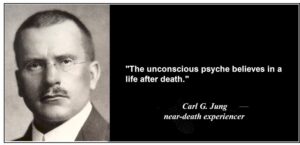
Jung did not claim to prove that there is an afterlife. Instead, he offered a way to talk about spiritual experiences without explaining them away. According to Jung, “The unconscious psyche believes in a life after death.” Dream symbols which exist in the very depths of the soul behave as if the psychic life of the individual will continue after death. Analytical psychology acts as a bridge between inner experience and spiritual meaning. Both Jung’s psychology and NDE research point to similar ideas. Consciousness appears deeper and wider than the ego. Transformation often comes through encounters with something beyond the personal self. Meaning seems to be built into existence itself. The parallels between analytical psychology and NDEs suggest that the human mind may naturally reach toward transcendence. Moments when boundaries fall away may reveal something basic and important about who we are.
- Read more about Psychological Evidence of the Afterlife.
4. Death, Transformation, and Renewal
Jung did not believe the mind is only a product of the body. He believed consciousness does not simply stop when the body dies. NDEs reveal something similar. They often describe death as a move into a different kind of awareness or way of being. Both views deny the idea that everything about the mind can be explained only by the physical body. They suggest that consciousness is part of something larger than the body alone.
Jung also believed that images of death usually stand for a kind of psychological “rebirth.” By this, he meant a deep inner change, not a real physical rebirth or reincarnation. Encounters with death, even symbolic ones, often signal major turning points that lead to greater awareness. For Jung, death marked a powerful transition and could involve a return to deeper levels of the mind. NDEs can be understood in this way as well. They show consciousness passing through that transition and coming into contact with the same shared inner realm that Jung explored through his own NDE, along with his dreams, visions, and myths.
- Read more about Death and the NDE.
Carl Jung and Reincarnation
Jung did not treat reincarnation as a belief you must accept or reject. He saw it as a question of the inner mind. For him, it was about symbols, experience, and what people sense deep inside themselves. Unlike religions that describe reincarnation as a fixed system, Jung looked at it as something that comes from shared human patterns, symbols, and inner experience.
Jung was careful not to make firm claims about what is literally true. He did not say reincarnation was a proven fact. But he also did not brush it off as pure imagination. Instead, he said it was a meaningful idea that shows up again and again in human thought, across many cultures and time periods.
Jung’s openness to reincarnation was strongly shaped by his NDE. During that experience, he felt himself existing beyond Earth. He saw the planet from space and felt free from his usual sense of self. This experience deeply changed how he thought about death and consciousness. Afterward, Jung focused less on religious belief and more on direct inner knowing through experience. At the same time, he admitted that such experiences are hard to prove or fully explain. He came to see death as a passage into a wider inner reality. For Jung, the fact that reincarnation beliefs keep appearing suggested they point to something real within the psyche. He believed that when an idea appears everywhere and keeps returning, it reflects an archetype. This view depended on his idea of the collective unconscious. The collective unconscious is a shared layer of the mind that holds common symbols and patterns. From this view, what feels like a “past life memory” may not belong to the everyday ego. Instead, it may come from the deeper shared mind of humanity.
Jung suggested that the psyche may not be limited to just one lifetime of ego awareness. Some dreams, visions, and gut feelings give people a sense of having lived before. Others feel like they carry unfinished work from before they were born. Jung saw these experiences as meaningful, whether taken literally or symbolically. He connected reincarnation with themes of death and rebirth, renewal, and cycles of time. Eastern traditions like Hinduism and Buddhism helped him understand these themes. Still, he translated them into psychological language instead of religious teaching. In Jung’s view, reincarnation reflects the mind’s push toward balance and wholeness. The idea of many lives points to the slow growth of consciousness beyond one personal story. For Jung, reincarnation suggested that life is more than a short and pointless span between birth and death.
Jung’s idea of individuation is about becoming whole over a lifetime. This naturally raises the question of whether one lifetime is enough. Jung never said that individuation clearly continues across many lives. But he wondered if consciousness might keep developing in future lives. This question mattered to him because full individuation is so rare. He suggested that the Self, the symbol of wholeness, may not be limited to one moment in time. Still, Jung did not claim reincarnation was definitely real or false. He stayed open and respectful of the mystery. He valued experience more than belief. As he said, “I have no proof whatever of the immortality of the soul – but I have experiences.” For Jung, reincarnation remained an open question. It invites the mind to reflect on its own deep and mysterious sense of continuity.
- Read more about Reincarnation and the NDE.
5. Ego Dissolution and Expansion of Consciousness
Carl Jung saw the ego as something we need, but something with limits. The ego is our everyday sense of “I.” It helps us manage daily life, play social roles, and think in a logical way. But Jung said the ego is not the whole mind. When the ego starts to believe it is all of consciousness, problems begin such as psychosis. At the same time, Jung noticed moments when the ego relaxes its control. When that happens, awareness can grow beyond personal limits. These moments can happen in dreams, mystical states, or NDEs. Jung saw them as contact with a deeper level of the mind.
NDEs closely match this way of thinking. NDErs often say their personal sense of “me” fades away. After that, they feel their awareness expand into something much larger. This larger state often feels deeply meaningful and connected. For Jung, losing the ego does not mean losing the Self. It means the ego steps back for a while. In individuation, the ego learns how to relate to larger inner parts of the mind, especially the Self. The Self is the deep center and wholeness of the psyche. As this relationship grows, the ego gives up the idea that it is in full control or separate from everything else. Jung experienced this himself during powerful visions described in The Red Book and during his own NDE. He felt detached from his personal identity and aware of a much wider form of consciousness. He said these states felt more real than everyday awareness, which is something many NDErs also say.
Jung warned that permanent loss of the ego can be dangerous if it is not worked through. It can lead to serious mental illness. The goal is not to destroy the ego, but to see it as one part of a much larger mind. When the ego loosens control in a healthy way, Jung believed awareness can expand beyond the personal self. This kind of expansion often includes several features. People may feel whole and deeply connected inside. They may experience symbols or universal images with clear meaning. They may gain strong moral insight and purpose. They may also feel deeply known, accepted, or guided. Jung explained these states in psychological terms, but he did not dismiss them as hallucinations. He believed they reveal real inner structures of the mind, even though they are expressed through symbols.
NDEs reflect Jung’s ideas in remarkable ways. First, there is the loss of personal identity. Many NDErs say the personal “me” disappears. This matches Jung’s idea of the ego dissolving when it meets the Self. Second, there is expansion into a larger awareness. Many NDEs include becoming one with light, God, or the universe. This awareness feels beyond space and time. Jung described this as entering an archetypal level of reality, where awareness is no longer limited to the ego. Third, there is a strong sense of clarity. Like Jung’s own NDE, many people say the experience feels more real than normal life. Thoughts happen instantly. Knowledge feels direct. Awareness seems limitless. In Jung’s terms, this is a shift away from ego-based thinking to awareness centered in the Self. Fourth, there are lasting changes afterward. Both Jung’s experiences and NDEs often lead to deep life changes. People fear death less. They cling less to ego concerns. They feel more compassion and a stronger sense of purpose. Jung saw this as proof that ego loss, when properly integrated, can be healing.
Jung’s main warning was about ego inflation. This happens when the ego identifies with the vast experience and says, “I am God,” instead of seeing itself as part of something greater. Many NDErs make a similar distinction. They feel united with God or the Whole, but they do not think their personal ego is the same as it. This balance – feeling unity without the ego taking over – is what Jung believed showed real psychological maturity.
Jung did not study NDEs in a formal way. Still, his psychology offers a clear way to understand them. Ego loss followed by expansion into a wider awareness sits at the center of both his ideas and many NDE reports. From a Jungian view, NDEs are archetypal experiences. In these moments, the ego steps aside, and awareness touches a deeper foundation. Whether people see these experiences as psychological, spiritual, or both, they point to the same message Jung stressed again and again: the ego is not the ruler of the mind. It is only the doorway.
- Read more about Soul Merge, Ego Loss and the NDE
- Read more about Consciousness Expansion and the NDE.
6. The Collective Unconscious
Jung developed the idea of the collective unconscious to explain a deep part of the mind that goes beyond personal memories and life experiences. This part of the mind is not unique to one person and is shared by everyone. Jung said it holds archetypes as symbols that all humans share. These show up in dreams, myths, religious experiences, and moments of deep inner change.
What is surprising is that the same kinds of symbols Jung talked about also appear in NDEs. This happens even when people have never heard of Jung or his ideas. This suggests that NDEs may involve direct contact with the same deeper layer of reality Jung was trying to describe. Jung said the collective unconscious belongs to all people, no matter their culture, education, or beliefs. We do not learn it. We are born with it as part of how consciousness works. Archetypes often appear on their own when awareness moves beyond the everyday ego.
Jung said these archetypal experiences often feel intense and deeply meaningful. They also feel sacred. Most important, people experience them as something real, not imagined. Many NDEs describe awareness leaving the body and entering a place that feels more real than normal life. NDErs often describe instant understanding, a wide view of everything at once, and a feeling of joining a shared field of consciousness. This matches Jung’s view that the collective unconscious is shared and not just a private mental experience.
Many common NDE elements line up with Jung’s ideas. These include a sense of timelessness beyond normal space and cause and effect. They include sudden access to deep knowledge or truth. People often feel like they are remembering something instead of learning something new. They also report meeting beings or presences that feel symbolic and universal, not personal. All of this appears like entering the collective unconscious, where awareness is no longer shaped by the ego.
The life review in NDEs, where people relive their actions through the eyes of others, fits with Jung’s belief that the mind has a built-in moral sense. Jung said moral awareness does not come only from society – it comes from the collective unconscious. In both Jung’s psychology and NDEs, moral truth feels self-evident. It is not handed down by some outside judge. Feelings of compassion and connection arise naturally.
During his own NDE, Jung described floating in space, seeing Earth from above, and nearing a point where he knew he could not return to life. He later said this experience felt more real than everyday reality and deeply changed him. It strengthened his belief that the mind is not limited to the brain and that consciousness can reach beyond the personal level. Modern NDE research strongly echoes this view.
Jung’s idea of the collective unconscious helps explain why NDEs are filled with powerful symbols, shared patterns, and lasting change. Both Jung’s psychology and NDEs point to a reality where consciousness is shared, symbolic, and deeply connected. It is not isolated or purely personal. Instead of challenging psychology, NDEs reveal its deepest roots. They suggest that beneath the individual ego is a shared field of meaning, memory, and identity – something humans have always known, and sometimes remember most clearly when close to death.
- Read more about Soul, Spirit and the NDE.
7. Archetypes as Universal Patterns
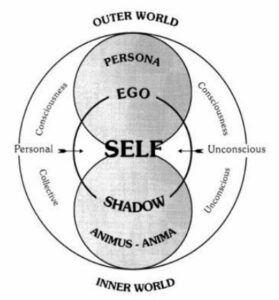 Jung believed that under our personal thoughts and memories is a deeper layer of the mind that all humans share which he called the collective unconscious. This shared layer is shaped by archetypes. Archetypes are basic patterns of experience that all people are born with. They shape how we feel, what we notice, and how we find meaning in life. When people go through major events like birth, death, crisis, or deep change, these patterns often rise up on their own. They appear as strong symbols, images, or powerful encounters.
NDEs show this very clearly. People from many cultures and belief systems report very similar things. They often describe meeting bright or loving beings. Many talk about seeing their whole life at once. Some describe moving through tunnels or other in-between spaces. Other NDErs speak of meeting wise presences or feeling a deep sense of unity and love. From a Jungian view, these are archetypal experiences that come forward when someone is close to death.
Jung explained that archetypes do not have fixed meanings. They are more like invisible molds that shape how experiences take form. They show themselves through images, myths, dreams, and visions. This happens most strongly when the normal sense of “me” begins to loosen. Being near death is one of the strongest triggers for this. Many NDEs happen at exactly this point. As the everyday sense of self fades, deeper layers of the mind come forward. This can lead to experiences that feel timeless, shared by all people, and more real than everyday life. For Jung, this is a clear sign that archetypes are being activated.
The Self (wholeness archetype)
Jung said the Self archetype is the center that holds the whole mind together. It is bigger than the ego. People often experience it as light, a sense of wholeness, or a divine presence. In many NDEs, people meet a bright Being of Light, sometimes called the “Higher Self.” This presence is described as loving without limits, knowing everything, and clearly understanding right and wrong. The experiences line up in clear ways. In both cases, a person meets something that feels ultimate and unifying. This encounter reshapes how they see who they are and what life means. Jung said the Self often shows up as light, mandalas, sacred beings, or images of wholeness. Many NDEs feel like a direct meeting with the Self, happening in just minutes instead of taking a whole lifetime of inner growth.
In Jung’s psychology, the Self is the most important and all-inclusive archetype of the mind. It stands for psychological wholeness. It brings together the conscious ego and the deep unconscious. It also guides the personality toward balance and integration. Very similar descriptions appear in many NDEs. People often report that their ego fades away and that they merge directly with a divine or universal consciousness. When you compare the two, Jung’s idea of the Self and the NDE experience of “merging with the Light” appears like two ways of describing the same basic reality.
One of the most common parts of NDEs is the feeling of being completely known. People do not feel judged or questioned. Instead, they feel fully understood at every level. Many NDErs describe meeting a glowing presence or field of awareness where nothing can be hidden. Thoughts, intentions, memories, regrets, and love all seem visible at the same time.
From a Jungian point of view, this is an encounter with the Self. In these moments, the ego’s usual defenses fall away. There is no need to explain or defend anything. Everything inside the person is already known and understood. What stands out is that this total knowing comes with a deep sense of relief. It feels as if the mind has finally returned to a natural state of wholeness and balance.
- Read more about the Higher Self and the NDE.
The Shadow (impulses the ego rejects or denies)
Jung believed it is important that people face the Self honestly. This often happens through meeting the Shadow archetype. The Shadow is made up of parts of our personality we push away, deny, or try not to see. In many NDEs, this shows up during the life review. People relive moments from their lives in a very clear and emotional way. They don’t just remember what they did. They feel how their actions affected others. They feel the joy they caused and the pain they caused. In these moments, nothing is hidden. This is a direct meeting with the Shadow. It is not someone else judging them. It is recognizing the truth about themselves.
Many NDErs say the life review does not feel like punishment. Instead, it feels like self-evaluation based on honesty and empathy. This matches Jung’s view that real change happens when we bring hidden parts of the mind into awareness. When this happens, a person can become more balanced, both morally and psychologically. From a Jungian point of view, the life review works like a full and sudden revealing of the Shadow. There is no room to make excuses, explain things away, or deny what happened. Jung believed facing and integrating the Shadow is necessary for mental health and spiritual maturity.
Jung also wrote that the Shadow comes forward most strongly when the ego is weak. This can happen during illness, crisis, or times when a person’s normal sense of identity breaks down. NDEs often happen under these exact conditions. When attention is no longer focused on survival or protecting the ego, people report suddenly seeing truths they were able to ignore before.
- Read more about the Life Review and the NDE.
The Hero (confronts danger for growth)
In Jung’s psychology, the Hero archetype stands for the ego’s drive to find meaning, stay alive, and grow. It is the part of the mind that steps into danger, faces what is unknown, and comes back changed. Jung saw the Hero as the part of us that shows conscious courage. It dares to leave what feels safe, face darkness, and return transformed. In Jung’s view, the Hero’s journey is mainly about inner survival and awakening. It means facing the unconscious, dealing with fear, and saving the Self from falling apart or getting stuck.
NDEs often follow this same pattern very closely. This suggests that NDEs may act out the Hero’s journey as a real experience, not just a symbol. An NDE can be seen as a living version of the Hero’s path. A crisis begins the fall into the unknown. The ego breaks down at the edge of death. Darkness gives way to light. Moral truth is faced. Then the person comes back changed. In this way, NDEs show the same timeless pattern Jung saw in myths and dreams. It is the soul’s journey through a death-like letting go, moving toward greater wholeness, guided by the lasting power of the Hero archetype.
The Wise Old Man/Woman (timeless wisdom and guidance)
Jung described the archetype of the Wise Old Man and Wise Old Woman as symbols of deep wisdom that come from the the collective unconscious. These figures stand for understanding that goes beyond the ego. They show clear values without judging and a kind of knowing that feels ancient, and not learned. They often appear during times of crisis or big change, when normal thinking is no longer enough. NDEs often reflect this same pattern in a very clear way.
Jung saw the Wise Old Man and Wise Old Woman as guides from within. They represent deep insight, strong moral sense, and wisdom that goes beyond personal life experience. This figure appears when the ego reaches its limit and cannot handle things on its own anymore. It shows the mind’s ability to find meaning beyond everyday life. This usually happens during crises, major transitions, or deep personal change. In many NDEs, people report meeting a Being of Light or a glowing presence. This presence gives off unconditional love, great intelligence, and authority. Communication often happens without words and feels instant and deeply understood. The presence does not judge, but seems to know the person completely.
This Being of Light closely matches the Wise Old Man or Wise Old Woman archetype. It is a figure of wisdom, compassion, and authority that shares knowledge without needing words. Jung believed these symbols appear on their own when the mind faces realities too big for logic or reason. NDE testimonies seem to use this same kind of symbolic language, as if the mind turns to its deepest shared images when facing death. Jung also said that archetypes often take forms that fit a person’s culture. In NDEs, this figure may appear as an angel, a spirit guide, a group of wise beings, a divine teacher, or simply a strong sense of pure knowing.
Jung believed archetypes show up most clearly when the ego loses control, such as in dreams, mystical experiences, or crises. NDEs are an extreme case of this. The senses shut down, and the sense of “who I am” becomes unstable. When this happens, the mind communicates through its deepest and most universal images. This helps explain why NDEs look similar across cultures, even when people have different beliefs. The details may change, like the images of light or beings, but the basic patterns stay the same. These patterns come from archetypes, not from what people expect or have been taught.
Jung also suggested that archetypes may point to a deeper connection between the mind and reality. He believed there may be a level where inner experience and outer reality meet. Many NDErs say the same thing. They feel certain they touched a more basic level of existence. From this view, NDEs are lived experiences of these deep patterns.
Jung’s idea of archetypes helps explain why NDEs feel so meaningful, clear, and life-changing. It shows that NDEs express universal patterns built into human consciousness. These similarities suggest that at near death, people encounter the same deep structures that have shaped myths, religions, and inner experiences for thousands of years. In Jung’s terms, NDEs may be rare moments when the collective unconscious speaks very clearly. They remind people not just of who they are as individuals, but of the larger whole they are part of.
- Read more about the Being of Light and the NDE.
- Read more about NDEs Involving Archetypes.
8. Individuation as Psychological Wholeness
For Jung, individuation is the lifelong process of becoming a whole person. It is not just about self-improvement. It is about bringing together the parts of the mind we know about with the parts we usually ignore or hide. This includes the ego, the Shadow, the Anima or Animus, and finally the Self. Jung used the Self as a symbol for the full, complete person.
Individuation means facing what we have pushed away or refused to see. It means letting go of false or inflated ideas about who we think we are. It also means living in a way that is guided by a deeper center, not just the ego. Jung believed this process often speeds up during crises. When illness, trauma, or a brush with death breaks down the ego’s usual defenses, the mind is forced to reorganize. At those times, the Self – not the ego – can take the lead. In this way, individuation is not just growth over time. It is more like an initiation.
NDEs often appear like a powerful and shortened version of individuation. In many cases, the ego fades or breaks apart. Consciousness expands instead of disappearing. People who have NDEs often describe contact with a deep sense of wholeness. What Jung described as a slow process over many years can show up in NDEs as a sudden and intense realization.
Some Key Parallels
(1) Ego loosening and the rise of the Self: Jung warned that the ego is useful for everyday life but becomes a problem when it thinks it is the whole mind. Individuation requires the ego to step back and recognize the Self as the true center. Many NDErs describe exactly this shift. The personal “I” fades, but awareness grows larger. People often say they felt more real than ever before. This matches Jung’s idea that the Self is deeper and more complete than the ego. Identity shifts from “who I think I am” to “what I truly am.”
(2) The life review and facing the Shadow: One of the strongest links between NDEs and individuation is the life review. Jung believed that becoming whole requires facing the Shadow. This means honestly seeing our actions, motives, and effects on others, without denial. In NDE life reviews, people often relive their actions and feel how those actions affected others. There is usually no punishment. Understanding takes the place of blame. This fits Jung’s view that real change comes from awareness, not from shame or repression.
(3) Encounters with powerful inner figures: Jung noticed that during individuation, archetypal figures often appear in dreams or visions. These might look like wise teachers, guides, or shining figures that represent the Self. NDEs often include similar encounters with Beings of Light or presences filled with wisdom and love. From a psychological view, these experiences express the same deep patterns Jung described. They guide the person beyond the ego and toward wholeness, no matter how they are interpreted.
(4) Wholeness, unity, and mandala-like order: Jung often used mandalas – images with circles, centers, and balance – to represent the Self. They show inner order forming out of confusion. Many NDErs describe entering places of perfect harmony, light, or unity. These spaces are sometimes described as radiant, geometric, or perfectly ordered. The feeling is one of peace, belonging, and completeness. This closely matches Jung’s description of the mind’s image of wholeness.
(5) Lasting aftereffects after returning: Individuation changes how a person lives. Jung believed that real contact with the Self reshapes values, priorities, and relationships. Many NDErs report similar changes. They fear death less. They care less about money or status. They feel more compassion and a stronger sense of purpose. These changes closely match what Jung saw as signs of successful individuation as living from the Self instead of the ego.
(6) Jung’s own NDE: Jung described floating above the Earth, seeing reality from a wider point of view, and feeling drawn toward a bright sense of wholeness. His NDE strongly influenced how he thought about death and the mind. He later suggested that death itself might be the final stage of individuation, when the ego fully lets go and consciousness returns to the Self.
(7) Different paths, same pattern: From a Jungian view, NDEs reveal a pattern that already exists in the psyche. Both individuation and NDEs involve letting go of the ego. Both point to a deeper center beyond personal identity. Both involve facing the Shadow with understanding instead of judgment. Both focus on unity, meaning, and wholeness. And both lead to lasting inner change. The main difference is timing. Individuation usually unfolds slowly across a lifetime. NDEs seem to compress the process into one powerful moment that feels less like learning and more like remembering something deeply true.
Jung’s idea of individuation offers a strong psychological way to understand NDEs without treating them as hallucinations or fantasy. Both point to the same basic insight: human consciousness is larger than the ego. Whether through years of inner work or an NDE, the movement is toward wholeness. It is a movement toward the Self as the deepest source of identity. Seen this way, NDEs can be understood as powerful lived examples of the process Jung believed was the central task of human life.
- Read more about Aftereffects and the NDE.
9. The Psyche as a Multidimensional Reality
For Jung, the psyche was never just something happening inside the brain. He saw it as wide, deep, and layered. It reaches beyond everyday awareness into shared symbols and deeper levels of experience. In his view, the mind has many dimensions. This way of thinking lines up closely with what people describe in NDEs, including strange inner landscapes, new states of awareness, and lasting personal change.
Jung did not believe the psyche stopped at the ego. He said the ego is only one small part. He described several layers of the psyche. The first is ego consciousness, which is normal waking awareness. The second is the personal unconscious, which holds forgotten memories, emotional patterns, and inner conflicts. The third is the collective unconscious, a shared inner world shaped by archetypes. The deepest level is the Self, which organizes the whole psyche and goes beyond the personal self.
To Jung, these layers were not just ideas. They were real inner worlds people could experience. In dreams, visions, deep imagination, mental breakdowns, or NDEs, awareness could move through these layers. People could encounter inner worlds that felt alive, intelligent, and larger than everyday life. This is similar to NDE reports where people feel they leave the body and move through different levels of reality, each with its own feel, rules, and beings.
NDEs often describe consciousness as having many dimensions. People say their awareness works without the brain and enters places that feel more real than the physical world. They often report sharp clarity and expanded awareness. Many NDErs describe glowing worlds or wide spaces beyond time. Others meet beings of light, guides, or wise presences. Some feel they move through different levels or realms. These experiences match Jung’s idea that awareness can loosen from the ego and enter deeper layers of the psyche. Just as Jung believed the psyche is not limited by space or time, NDEs often describe awareness as free from those limits.
Jung also stressed that the deeper psyche communicates through symbols, not literal images. These symbols appear on their own and carry meaning shared by all people. Common images include light, tunnels, heavenly cities, judgment scenes, and divine figures. NDEs often unfold in symbolic settings that feel both personal and universal. Many NDErs reach a boundary they cannot cross. Others experience a full life review. From a Jungian view, these are encounters with deep symbolic realities that appear when awareness enters shared inner layers of the psyche.
At the deepest level of Jung’s model is the Self. He described it as the whole psyche and as a bridge between the personal mind and the larger universe. Encounters with the Self often bring feelings of wholeness, timelessness, and deep meaning. NDErs often report feeling completely known and accepted. Many NDErs describe encountering a loving intelligence greater than themselves. Others say they felt part of universal consciousness rather than a separate ego. These closely match Jung’s view of the Self as a center of awareness beyond the ego that still includes it.
Jung’s ideas came not only from study but also from his own NDE. He described seeing the Earth from space and moving toward a vast, temple-like structure. He felt deep peace and powerful meaning. Afterward, he said this experience convinced him that consciousness can exist apart from the body. He believed it takes place in a kind of psychic reality that cannot be explained by biology alone. This experience strengthened his belief that the psyche is part of a much larger, layered order.
One of the strongest links between Jung’s views and NDEs is how both challenge materialism. Jung argued that the psyche is not created by matter. He believed it is a basic part of reality itself. Many NDErs return believing the same thing. They feel consciousness comes first and does not end with death. Both views suggest that reality has layers, not just one level. They suggest consciousness can move between these layers. They also suggest that meaning and intelligence are built into existence itself.
Jung’s picture of the psyche as a multi-layered reality offers a helpful way to understand NDEs. From a Jungian view, NDEs happen when awareness briefly enters deeper inner worlds. These are the same worlds Jung explored through symbols, archetypes, and inner experience. In both Jung’s psychology and NDE reports, consciousness appears as a traveler moving through a vast, ordered, and deeply meaningful universe – one that reaches far beyond physical life.
- Read more about the Soul, Spirit and the NDE.
10. Synchronicity as Meaningful Coincidence
Carl Jung used the word synchronicity to refer to meaningful coincidences. These are events that are not linked by cause and effect, but still feel deeply important. To Jung, they happen when a person’s inner thoughts or feelings line up with something happening in the outside world. These moments seem too meaningful to be random. Jung believed they point to a deeper order in reality, where the mind and the world are not separate, but connected. NDEs often feel the same way. NDErs describe events, messages, and insights that feel perfectly timed and full of meaning, as if guided by something beyond normal cause and effect. Seen through Jung’s ideas, NDEs can be understood as powerful moments where the inner mind and the universe briefly come together.
The inspiration for Jung’s research into synchronicity was an actual event that happened to Jung while one of his patients was telling him of an impressive dream she had the night before. As she was telling Jung about how someone in her dream had given her a costly piece of jewelry in the form of a golden scarab (a beetle), Jung heard something behind him out of her view which was gently tapping on the window. Jung turned around and opened the window and immediately caught the large insect that flew in. It was a scarabaeid beetle, or common rose-chafer (Cetonia aurata), whose gold-green color most nearly resembles that of a golden scarab. Jung handed the beetle to his patient with the words, “Here is your scarab.”
Jung noticed that synchronicities often happen during intense times in life. These include crises, big changes, or moments when someone is questioning the meaning of life. To the person experiencing them, these events do not feel random. They feel symbolic and life-changing. Jung took this as evidence of a level of reality where the mind and the physical world overlap. NDEs usually happen at the most intense moment possible. During these experiences, NDErs often say that everything they see or feel fits their life and inner state exactly. Visions, beings, and insights feel meaningful and ordered, not random. This matches Jung’s idea that synchronicity reveals an underlying order, not chance.
Synchronicity often includes archetypal symbols. Jung found that symbols like circles, light, guides, journeys, and powerful encounters often appear in synchronistic moments. NDEs are filled with the same kinds of symbols. People describe meeting a Being of Light or a Higher Self, moving through tunnels or gateways, reviewing their life with strong emotional clarity, and feeling unity and timelessness. From a Jungian view, these experiences come from shared structures in the human psyche that activate during extreme states of consciousness. The fact that people across cultures report similar experiences makes the connection between synchronicity and NDEs even stronger.
Both synchronicity and NDEs involve a breakdown of normal time and cause and effect. A key feature of synchronicity is that events connect through meaning, not through physical causes. Jung believed time works differently in the deep layers of the mind. In the same way, NDErs often say time disappears. Past, present, and future seem to exist all at once. Understanding comes instantly, without thinking step by step. Knowledge just arrives fully formed. This matches Jung’s belief that synchronicity comes from a deeper order that is not limited by time and space.
Synchronicity and NDEs also point to a unity between the mind and the universe. At its core, synchronicity suggests that consciousness is part of reality, not just watching it. Jung believed meaningful coincidences show that the universe responds to inner states. Many NDEs end with a strong feeling of oneness. People feel completely connected to the universe, to life, or to God. This feeling is direct and unquestionable. In Jung’s terms, this reflects contact with the Self, which goes beyond the everyday ego and mirrors the structure of the universe itself.
Both synchronicity and NDEs are linked to deep personal change. Jung believed synchronicities often appear during individuation, the process of becoming more whole and true to oneself. These events signal that something inside is realigning. NDEs are some of the most life-changing experiences people report. Afterward, many say they fear death less, feel more meaning in life, act with more compassion, and feel guided or realigned with a deeper purpose. In this way, NDEs act like powerful synchronistic events that reshape a person’s values and sense of identity.
Synchronicity and NDEs offer a shared view of reality as meaningful. Jung’s idea of synchronicity and the reports of NDEs point to the same insight: reality is not just mechanical. It is filled with meaning. At key moments – whether emotional, psychological, or physical – human awareness seems to touch a deeper order where symbols, timing, and understanding line up in remarkable ways. From this view, NDEs can be seen as synchronistic encounters with an interconnected reality, where the line between inner experience and outer world fades, and meaning becomes as real as physical experience.
Jung spent time discussing with Albert Einstein and Wolfgang Pauli, two major figures in quantum physics, about what Jung came to believe were links between synchronicity, the relativity of time, and human consciousness. Jung was deeply drawn to the idea that life is not just a chain of random events. Instead, he believed life follows a deeper pattern or order. He and Wolfgang Pauli called this deeper order the “one world.” By this, they meant a single underlying reality from which everything comes and to which everything returns. Jung believed this hidden order can show itself through synchronicity. In his view, meaningful coincidences are not accidents; they are signs of this deeper unity at work. This idea later became a foundation for what is often called quantum mysticism. Some modern quantum theories seem to fit this way of thinking. These include the many-worlds interpretation of quantum mechanics and the related idea of many minds. These theories suggest that reality may branch into many possible versions. From this view comes the idea of quantum immortality. This idea suggests that a non-physical soul could, at least in theory, continue to exist after physical death.
- Read more about After-Death Communications (ADCs) and Synchronicity.
11. Symbolism as the Language of the Psyche
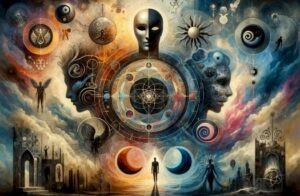 For Jung, symbols were practical tools. He believed symbols are the mind’s natural way of speaking. They are how the unconscious communicates with our everyday awareness when logic and clear thinking fall short. Dreams, myths, religious images, visions, and sudden inner experiences all share meaning through symbols, not literal facts. NDEs work the same way. They use strong images that are hard to put into words. This suggests they come from the same deep level of the mind.
Jung believed symbols are necessary for the mind to work. He said the unconscious cannot be understood by logic alone. Instead, it speaks in pictures that carry strong feelings and many layers of meaning. A symbol is not a simple sign with one clear meaning. It is a living image that points to something larger, something not fully known. Symbols appear when the mind runs into experiences that are too big or powerful for words. These include feelings of wholeness, infinity, death, or the divine. Jung thought these symbols often appear on their own and feel discovered, not made up.
Jung said dreams are “the main source of all of our knowledge about symbolism.” This means that the messages you receive from your dreams are expressed symbolically and must be interpreted to find their true meanings. According to Jung, rarely do the symbols in dreams have just one meaning. And when interpreting the messages in your dreams, he suggests going with your first hunch, relying on your intuitive abilities, before applying more rational methods of dream interpretation.
NDEs also use images as a kind of symbolic language. They are filled with repeated images like tunnels, bright light, borders, full life reviews, beautiful otherworldly places, guides, or beings made of light, and feelings of deep love. NDErs often say the experience felt more real than normal life. Still, the way the experience shows up matches Jung’s idea of symbolic expression. From a Jungian view, these images come from the deepest layers of the mind. They act as archetypal symbols that help a person face something beyond the personal self. The basic structure of these symbols stays the same across many NDEs.
Jung often linked the Self to images of light, which fits closely with NDEs. He saw light as a symbol of the Self, the center and wholeness of the mind. Light stands for completeness, truth, and inner unity. In NDEs, people often meet a Being of Light or feel surrounded by intense brightness. This light usually brings total acceptance, deep understanding, and unity. NDErs say they feel fully known and completely loved at the same time. These are the same qualities Jung connected with encounters with the Self. The light is not just something you experience. It represents who you are, why you matter, and where you belong.
There is also a strong connection between NDE tunnels and Jung’s ideas about thresholds. Jung saw passageways like tunnels, bridges, doors, and gates as symbols of change. They mark movement between one state and another, such as between ego and Self, one stage of life and the next, or awareness and unconsciousness. NDE tunnels fit this meaning exactly. They often appear when the normal sense of self fades. They guide awareness away from the body and toward a wider state of being. Symbolically, the tunnel acts like a rite of passage from one way of existing to another.
The life review in NDEs also matches Jung’s idea of wholeness. Jung believed the mind naturally pushes toward seeing the whole picture of one’s life. This includes both good and painful moments. During an NDE life review, people relive their actions with strong emotional and moral clarity. This reflects the mind’s drive to bring everything together. Symbolically, the life review shows the person facing their life as a complete whole, not as scattered memories. This fits Jung’s belief that meaning comes from seeing the full pattern of one’s life.
Both NDEs and Jungian psychology include guides and symbolic figures. Many NDEs involve meeting guides, deceased loved ones, or light beings. Jung described these figures as archetypes that represent inner realities. They often appear as wise teachers, inner opposites, or helpers that guide awareness between different states. These figures symbolically help connect the everyday self with deeper layers of meaning. Their wisdom, care, and authority reflect the mind’s built-in tendency toward order and purpose.
Both NDEs and Jung’s view of symbols also point to the limits of language. NDErs often say they cannot fully explain what happened. They fall back on phrases like “light beyond light,” “love beyond love,” or “knowing without words.” Jung saw this struggle as a key sign of symbolic experience. Symbols appear when normal language fails. In both cases, images are the closest way to express experiences that go beyond clear thought.
NDEs and Jungian symbolism both sit at the meeting point of the mind and something beyond it. Jung believed symbols can deeply change a person, no matter how one explains their ultimate source. NDEs exist in this same in-between space. They can be seen as encounters with a higher reality or as powerful symbolic experiences at the edge of death. Either way, their lasting impact comes from their symbolic form. These images reshape a person’s identity, values, and sense of meaning long after the experience ends.
Jung’s view of symbols as the language of the mind offers a strong way to understand NDEs. Both come from deep levels where logic gives way to image and archetype. NDEs speak in the same symbolic language that Jung believed humans have used since the beginning. This language is not meant just to explain things. It is meant to change the person who experiences it.
- Read more about Dreams and the Afterlife.
12. Religion as Inner Experience
For Jung, religion starts with a direct inner experience. It is not mainly about beliefs or rules. It is an encounter with powerful forces inside the mind that feel overwhelming, meaningful, and life-changing. These forces feel “sacred” or special in a deep way. Jung believed religion grows out of real experiences with something greater than the everyday self, something that feels alive in the depths of the soul. Many NDErs describe their experiences in very similar ways.
Jung often talked about the “numinous.” This means an experience that brings awe, fear, fascination, and deep meaning all at once. Using ideas from Rudolf Otto, Jung said religious experiences happen when the ego runs into something far bigger than itself. This greater presence is often felt as divine and absolute. It is not something the ego controls.
Jung also made it clear that these experiences are psychologically real, no matter how someone explains them spiritually or philosophically. They happen on their own. You cannot force them to occur. And once they happen, they leave a deep mark on how a person thinks, feels, and lives. For Jung, this was the true heart of religion: a direct meeting with a reality beyond the personal self that rises up from within the psyche.
NDEs match this pattern closely. NDErs often describe meeting a Presence or a Light. This Presence feels loving, intelligent, and powerful. It feels deeply sacred, even though words cannot fully describe it. Like Jung’s numinous experiences, NDErs often say they did not choose the encounter. It happened to them. And afterward, their view of life is permanently changed.
Both NDEs and Jung’s psychology place more value on inner experience than on outside belief systems. Jung was very skeptical of religion that is based only on tradition or secondhand faith. He believed religious teachings began as symbols of real inner experiences. Over time, these symbols became fixed doctrines and institutions. When people accept them without having any inner experience of their own, religion becomes empty and rigid.
NDEs show the same tension. Many people return from NDEs feeling that organized religion matters less than direct knowing. They often lose interest in rules and dogma. At the same time, they feel more spiritual than before. They also tend to feel more caring, ethical, and compassionate. Like Jung, they focus on inner change rather than belief systems.
Both Jung and NDErs reveal that true spiritual authority comes from experience, not just tradition or scripture. Jung understood images of God as expressions of the Self. The Self, in his psychology, is larger than the ego and organizes the entire psyche. Encounters with God, light, or ultimate reality happen when awareness lines up with this deeper wholeness.
Descriptions of the Light in NDEs often resemble each other. People say it feels personal and loving, yet also vast and universal. It feels close and intimate, but also cosmic. It offers love, but also brings moral clarity. This matches Jung’s idea of the Self. It is not the ego. It is a higher ordering presence that fully knows the individual. In both Jung’s work and NDE testimonies, people feel completely seen, accepted, and made whole. The experience brings meaning, not punishment.
For Jung, the truth of a religious experience is shown by what it changes. A real encounter with the numinous reshapes the personality. It brings a stronger sense of meaning, deeper ethics, more humility, and greater responsibility toward life. This fits closely with what researchers see after NDEs. Many people report long-lasting changes. They fear death less. They care more about others. They value money and status less. They feel a clearer sense of purpose. These changes often last for decades, even when the experience itself cannot be explained logically.
Both Jung and NDErs suggest that transformation, not belief, is the true sign of spiritual experience. Jung noticed that powerful religious experiences often involve a loosening of the ego. This allows deeper and wider layers of the psyche to come forward. He warned that losing the ego completely is unhealthy, but he believed that temporary surrender of the ego can be healing and revealing.
NDEs push this process even further. As the body shuts down, the usual sense of self often disappears entirely. NDErs report feelings of unity, expanded awareness, or merging with light. These states resemble the mystical core of religion that Jung believed lies beneath all spiritual traditions. They are direct encounters with a reality beyond the personal self.
Seen this way, NDEs can be understood as spontaneous religious experiences in their purest form. They are not shaped by doctrine or belief. Jung’s view of religion as inner experience offers a strong way to understand them. Both point to spirituality as something remembered through experience, not adopted through belief.
They suggest that God is encountered inwardly, during moments when the ego steps aside and something greater takes over. In Jung’s terms, NDEs may be direct encounters with the numinous center of the psyche – the same source from which religions first emerged. In both cases, the experience itself creates meaning. And long after words fail, its effects continue to shape a life marked by depth, connection, and a sense of something beyond the ordinary.
- Read more about Religion and the NDE.
- Read more about Spirituality and the NDE.
Carl Jung and Christian Gnosticism
Jung saw Christian Gnosticism as one of the most psychologically deep spiritual systems from early Christianity. He did not treat it as a mistaken belief or heresy. Instead, he understood it as a symbolic guide to inner experience – almost like an ancient psychology of the soul. When you look at it this way, strong similarities appear between Gnostic teachings and modern NDEs. These include inner awakening, encounters with divine light, and freedom from illusion.
At the center of Christian Gnosticism is “gnosis,” which means direct knowing. This is not belief or faith based on rules or authority. It is a personal, lived knowing of the divine. In Gnostic thought, salvation comes from waking up to a forgotten truth – the divine spark inside the soul. Jung saw this as a psychological idea. To him, gnosis stood for an encounter with the Self, the inner center of wholeness. Many people who have NDEs describe something similar. NDErs say they did not just believe what they experienced. They knew it was true, right away and without doubt. The truth felt direct, clear, and certain, just as Gnostics described.
Gnostic writings often say that humans carry a piece of divine light trapped in the physical world. The goal is to remember this light and reclaim it. Jung understood this image as a symbol of the deepest part of the psyche trying to become conscious. NDE testimonies often resemble each other. NDErs say they realized they were not their bodies or their egos. Instead, they felt like a glowing, eternal presence. Many NDErs say they “became light” or understood they had always been light. This matches the Gnostic image of hidden divinity waking up inside the soul.
In Christian Gnosticism, the material world is often described as false or distorted. It is a place of confusion, sometimes ruled by forces that hide the truth. Freedom comes from waking up and seeing clearly. Jung explained this in psychological terms. He said the “false world” stands for ego-consciousness – the narrow sense of self that thinks it is everything. Many NDErs report a sudden realization that everyday life had only shown part of reality. When they left the body, they felt clear, aware, and free from fear. This feels like the same kind of awakening described in Gnostic texts.
Gnostic writings are filled with images of intense light, radiant beings, and moments of total understanding. Jung saw these as symbols of deep inner change. NDE testimonies often describe the same thing. People talk about meeting a Being of Light or entering a bright realm filled with love and intelligence. They often say the light shared knowledge instantly, without words. This matches how Gnostic revelation is described. In both cases, truth is not taught step by step. It is revealed all at once and felt as deeply personal and certain.
Many Gnostic traditions rejected the idea of a harsh, outside God as a judge. Instead, judgment came from awakening to truth. When ignorance fades, clarity takes its place. Jung thought this was a very advanced idea. He believed real change comes from honest self-awareness, not judgment or punishment. This closely matches how people describe NDE life reviews. NDErs often say the review was loving but completely honest. They judged themselves, not out of fear, but from a place of understanding and connection. Insight replaced blame, echoing the Gnostic idea that awakening itself is the judgment.
In Gnosticism, awakening leads to freedom from repeated reincarnation and a return to divine fullness. Jung understood this symbolically. To him, it described individuation – the process of becoming whole by reconnecting with the deeper Self. Many NDEs follow a similar pattern. People leave the body, enter a higher reality, and then either return to life or sense that full union lies ahead. NDErs often come back deeply changed. They become more compassionate, fear death less, and feel connected to something eternal. Jung believed that contact with the Self always changes how a person lives.
Jung thought Gnosticism came from direct experiences of the unconscious long before psychology had words for them. NDEs seem to rise from the same deep level of the psyche or from consciousness itself. They produce similar symbols across cultures and history. When seen together, Christian Gnosticism and NDEs form a shared map of inner experience: awakening through inner knowing, recognizing the divine spark within, letting go of ego illusion, meeting transcendent light, being transformed through self-knowledge, and returning to a greater whole. For Jung, these similarities did not weaken the meaning of these experiences. They made them deeper. Both Gnosticism and NDEs point to the same lasting truth: God is not just something to believe in. God is something remembered, experienced, and lived from within.
- Read more about NDEs and Gnostic Christianity.
13. Mandalas and Sacred Geometry
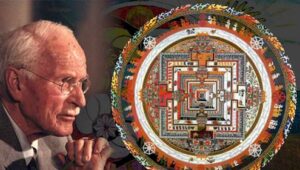 Carl Jung saw mandalas and sacred geometry as deep signs of how the mind organizes itself. He believed these shapes come up on their own during times of inner crisis, big change, or when a person is trying to feel whole again. The same kinds of shapes often show up in NDEs. People describe glowing geometric worlds, perfect balance, and a strong feeling that everything makes sense.
Jung described a mandala as a shape that is usually round, balanced, and centered. He saw it as a symbol of the Self, which stands for wholeness. The Self brings together both the conscious and unconscious parts of the mind. Jung noticed that mandalas often appear during hard times, like illness or emotional breakdowns. They also appear in dreams, visions, and spontaneous drawings. He believed they show up when the mind is trying to restore balance. Jung even drew mandalas every day during a very difficult period in his own life. Later, he realized they were showing an inner order he was not controlling on purpose.
Jung also saw sacred geometry as a kind of structure behind meaning itself. He believed these patterns were not just personal. They also appear across cultures in religious art and spiritual ideas. Shapes like circles, spirals, spheres, and glowing centers show up again and again. Jung thought these forms come from shared patterns in the collective unconscious. To him, they showed how the inner mind and the universe reflect each other.
In Jung’s view, geometry is a kind of mental language. It lets the unconscious express ideas that words cannot fully explain. NDEs often include the same kind of geometry. Many people report entering places filled with perfect balance and glowing shapes. Some see circles of light or moving patterns. Others feel that reality itself is built on harmony and order. Many also feel drawn into a bright center. These moments often feel familiar, as if they are remembering something deeply true rather than seeing something new.
Both Jung’s psychology and NDEs involve the ego falling away around this center. Jung said mandalas appear when the ego loosens its grip and the Self comes forward. In NDEs, people often feel their personal identity dissolve. They may shift from a narrow sense of “I” to a wider awareness. They may feel both inside the experience and observing it at the same time. In both cases, awareness moves from the edges toward the center. Instead of feeling split apart, the person feels whole and connected to a larger order.
Jung stressed that mandalas are not static images; but are alive and active. This matches NDE reports where geometric forms feel intelligent, loving, and meaningful. The light that people see does not feel random or chaotic. It feels carefully ordered. This fits Jung’s idea that these patterns sit at the edge between mind and matter. Many NDErs say reality feels mental, symbolic, and made of light, as if consciousness itself is what shapes everything.
For Jung, mandalas pointed beyond the personal mind. He thought they hinted at a deeper order that the psyche takes part in. NDEs support this idea because they often happen when brain activity is very low or absent. Yet the experiences feel clear, organized, and rich with meaning. Both mandalas and NDE geometry suggest that consciousness may not come only from the brain. Instead, it may come from a deeper, structured field of meaning.
Jung also took spiritual experiences seriously. He did not brush them off as simple hallucinations. He saw them as psychologically real and symbolically true, even if their ultimate nature remained unknown. NDEs seem to sit right in the space that Jung described, where inner experience and something beyond the personal overlap. In this shared space, mandalas and sacred geometry act like bridges. They connect inner growth, cosmic order, and the mystery of consciousness. Jung’s work shows the mind moving toward wholeness. NDEs seem to show that same movement on a much larger scale. Both point to a reality where consciousness shapes itself through light and meaning.
An NDE Example of Encountering Mandalas
Nancy Evans Bush, a devout Christian, had a hellish NDE resulting from a severe complication during childbirth. She described seeing unusual mandalas during her NDE:
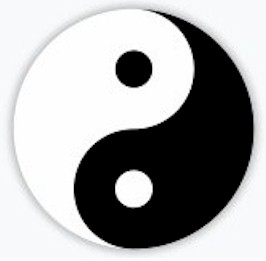 “I was rocketing through space like an astronaut without a capsule with immense speed and great distance. A small group of circles appeared ahead of me. To the right was just dark space. The circles were black and white and made a clicking sound as they snapped black to white and white to black. They were not evil exactly, just mocking and mechanistic. The message in their jeering was, “Your life never existed. The world never existed. Your family never existed. You were allowed to imagine it. You were allowed to make it up. It was never there. There was nothing there. There never was anything there. You’re not real.”
Several years after her NDE, Nancy was looking through a book on Eastern philosophy. What she saw in the book so upset her she threw the book across the room. In the Eastern philosophy book was the same circular shape she saw in her NDE. It was the Chinese symbol “yin-yang” which represents the oneness of all so-called opposite principles we find in the universe.
It is apparent that Nancy was confronted by Zen Buddhist entities in the Void with her. This Buddhist concept of reality posits that nothing in this physical world is independently real. People consist of a “bundle” of habits, memories, sensations, desires, and so forth, which together delude people into thinking that he or she consists of a stable, lasting self. According to Buddhism, this false self is what reincarnates body after body. In Buddhism, life in a corporeal body is the source of all suffering. Hence, the goal is to obtain liberation. This means abandoning the false sense of self so that the bundle of memories and impulses disintegrates, leaving nothing to reincarnate and hence nothing to experience pain. “Nirvana” is the Buddhist term for liberation. Nirvana literally means extinction – an extinction that allows a person to become one with all there is – to become “God” (Buddhahood). To attain Nirvana, one must face and accept the concept that physical reality is not what it seems. True reality comes through self-extinction which results in becoming one with the Clear Light.
Nancy Evans Bush’s description of circles snapping between black and white, accompanied by a mechanical, mocking quality, fits well within Jung’s observations of “dark mandalas.” From a Jungian perspective, these features suggest: (1) Circular form as an emergence of a Self-symbol; (2) Black–white polarity as a confrontation with psychic opposites; (3) Mocking, dehumanized tone as ego destabilization and encounter with the impersonal unconscious; and (4) Message of non-existence as a radical dissolution of the ego’s narrative continuity. Jung repeatedly noted that when the ego is overwhelmed, the Self may appear not as comforting wholeness but as annihilating totality.
- Read more about the Void and the NDE.
14. Astrology as Symbolic Psychology
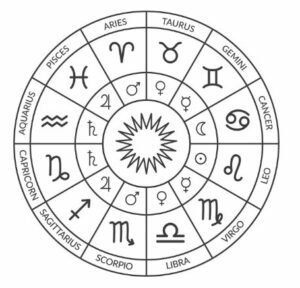 Jung saw astrology as a symbolic language of the mind. However, he did not see it as a tool for prediction. Instead, he viewed it as a kind of story map that shows common patterns in human inner life. For Jung, astrological symbols reflect what is happening inside the psyche, much like dreams, myths, and religious images do. When you look at astrology this way, clear similarities appear between Jung’s ideas and the patterns people report in NDEs.
Jung said astrology works through meaning, not cause and effect. Planets do not make events happen. Instead, they stand for inner forces that are active at certain moments. Each planet represents a basic part of the psyche. Saturn stands for limits and structure. Venus stands for connection and what we value. Mars stands for drive and energy. The zodiac is a symbolic cycle that reflects stages of human growth and change. In this view, astrology maps how experiences are shaped. It does not tell you what must happen. It shows patterns of meaning, not fixed destiny. These astrological insights agree with Edgar Cayce’s insights into astrology.
NDEs and Jungian psychology move through the same symbolic world. Many NDEs unfold in ways that match the archetypal patterns Jung described. Encounters with beings of light often resemble archetypal figures, such as a wise guide, a divine child, or the deeper Self. Life reviews reflect a wide, whole view of life, which Jung linked to the Self rather than the everyday ego. Traveling through tunnels, light, or vast spaces mirrors symbolic shifts between inner states. Many NDErs feel they have entered a larger order filled with intelligence and meaning. Like astrology, NDEs communicate mostly through symbols, images, and direct knowing.
There are also strong links between synchronicity, astrology, and the NDE. As mentioned earlier, Jung used the word synchronicity to describe meaningful coincidences that have no clear cause. He believed astrology worked this way too. The moment of birth, in this view, lines up meaningfully with certain inner patterns. NDEs often include similar experiences of timeless meaning. Knowledge appears all at once, without step-by-step thinking. Past, present, and future seem to blend together. Events feel both unavoidable and deeply meaningful. Both astrology and NDEs suggest a universe where meaning comes first, and where consciousness takes part in a larger symbolic order.
Jung saw the zodiac as a mandala of the Self. The zodiac circle works in the same way. It represents the whole psyche, not just parts of personality. Each sign stands for an important function that helps form the complete self. NDErs often say they feel fully known and fully accepted. They feel both unique and universal at the same time. Many NDErs sense that their life fits into a larger, ordered pattern. This matches Jung’s idea of the Self, which goes beyond the ego and shows itself through symbols like circles, myths, and cosmic images.
As Jung understood it, astrology loosens the grip of a narrow ego by placing a person within a wider cosmic picture. NDEs often do the same thing. People report a fading of ego boundaries, a sense of unity with a greater awareness, and a feeling of belonging to an intelligent universe. Both point to the same idea: the ego is not the center of everything. It is one expression of something much larger.
Jung’s symbolic view of astrology and the lived experience of NDEs meet at a deep insight. When consciousness reaches its deepest levels, reality speaks through symbols. Astrology maps the psyche across symbolic time. NDEs place consciousness directly inside that symbolic space. Both act as maps of meaning. They suggest that human awareness exists within a symbolic universe, where inner experience and outer order reflect each other. In this shared space, astrology and NDEs speak the same language about wholeness, change, and deep meaning.
Jung did an analysis of astrology to determine its place in synchronicity. He studied 483 married couples and noted the astrological connections between the birth dates of married couples. These findings concluded that long lasting relationships had a certain astrological pattern which were found to be three times higher than the rate of coincidence. Also astounding was the fact that the couples whom astrologers would interpret as being the most conducive to marriage were the couples whose astrological pattern occurred most frequently. The pattern that astrologers interpret as least conducive to marriage occurred least often among the couples. Jung calculated the odds of the this result occurring randomly is 1 in 62,500,000. Jung believed incidents like these are the result of synchronicity.
- Read more about Astrology and the NDE.
- Read more about Scientific Evidence Suggestive of Astrology.
15. Publications By and About Carl Jung
The books listed below by Jung and others offer a clear path into a way of psychology that takes inner experience seriously, especially experiences that happen at the edges of normal awareness such as NDEs. Altogether, they look at dreams, symbols, religious images, moral change, and moments that feel bigger than the everyday self. These books are especially helpful for understanding NDEs because it gives insights into unusual states of awareness, encounters with light or guiding figures, life reviews, and deep changes in meaning. It does this without treating these experiences as mental illness or just personal belief. These sources move from personal visions to careful psychological ideas, and then to later explanations by students and scholars. They show how powerful experiences can reshape a person’s identity and sense of purpose, often long after the experience is over.
Jung’s Biography, NDE and Personal Reflections
Memories, Dreams, Reflections (1963) – Jung’s semi-autobiographical reflections on his life, dreams, and spiritual experiences. Essential for NDE studies. Jung describes his own NDE, visions of light, altered time, and encounters with a larger reality beyond the ego.
Core Jungian Works
The Collected Works of C. G. Jung (1953) – Jung’s complete writings, published in 20 volumes. This is the authoritative source for his ideas.
Two Essays on Analytical Psychology (1917) – Introduces the core ideas of analytical psychology, including the ego, unconscious, and individuation.
Psychological Types (1921) – Lays out Jung’s theory of personality types, which later inspired the Myers-Briggs system.
The Archetypes and the Collective Unconscious (1959) – Explains archetypes, the collective unconscious, and universal symbolic patterns. Provides the psychological framework for understanding NDE encounters with beings of light, guides, and universal symbols.
Aion (1951) – A deep exploration of the Self, the Shadow, and symbolic ideas of wholeness. Explores the Self, moral reckoning, and psychic wholeness – strongly aligned with NDE life review and ethical insight themes.
Jung’s Books on Symbols and the Unconscious
Symbols of Transformation (1912) – Jung’s early major work on myth, symbols, and psychological change. A deep study of death–rebirth symbolism and psychological renewal, mirroring classic NDE transition narratives.
Man and His Symbols (1964) – Written for general readers. One of the best introductions to Jung’s ideas. Explains how symbolic imagery communicates meaning when ordinary thinking breaks down – exactly how many NDEs are described.
The Symbolic Life (1958) – Essays on symbols, dreams, religion, and everyday psychological meaning. Shows how numinous experiences reshape meaning, values, and life direction after transformative events like NDEs.
Jung’s Books on Religion, Alchemy, and Spiritual Psychology
Psychology and Religion (1907) – Jung’s view of religion as a psychological and experiential reality. Frames transcendent encounters as psychologically real and transformative, regardless of metaphysical interpretation.
Answer to Job (1952) – A controversial psychological interpretation of the biblical Book of Job.
Mysterium Coniunctionis (1955) – Jung’s most advanced and complex work on alchemy and individuation. Relevant for advanced readers exploring unity, transcendence, and the reconciliation of opposites often reported in NDEs.
Jung’s Books on Dreams, Visions, and Inner Experience
Synchronicity: An Acausal Connecting Principle (1952) – Directly relevant to NDE reports of meaningful events unfolding outside linear time and causality.
Dreams (1974) – Jung’s writings and seminars on the meaning of dreams.
The Red Book (1914) – Jung’s personal visionary record. Central to understanding his inner experiences and later ideas. Jung’s record of profound inner journeys, encounters with autonomous figures, and ego dissolution – closely paralleling NDE phenomenology.
Important Books About Jung Written By Others
Jung: A Biography (2003) by Deirdre Bair – The definitive modern biography of Jung that is based on archival research, interviews, and correspondence.
Jung: His Life and Work (1976) by Barbara Hannah – Written by Jung’s close colleague and student. Deep insight into his personality, methods, and daily work. Less critical, but very faithful to Jung’s intentions.
The Psychology of C. G. Jung (1942) by Jolande Jacobi – One of the clearest systematic presentations of Jung’s ideas. Frequently used in Jungian training institutes. More technical, but extremely precise.
Jung: A Very Short Introduction (1994) by Anthony Stevens – Short, accurate, and intellectually honest. Excellent overview without mystification. Ideal for orientation before deeper study.
Jung and the Lost Gospels (1989) by Stephan A. Hoeller – Explores Jung’s relationship to Gnosticism and early Christianity. Important for understanding Jung’s religious psychology.
C. G. Jung and the Alchemical Imagination (2000) by Jeffrey Raff – Explains Jung’s use of alchemy as symbolic psychology. Bridges myth, inner experience, and transformation.
Jung and the Post-Jungians (1985) by Andrew Samuels – Maps how Jung’s ideas evolved into different schools. Essential for understanding modern Jungian psychology.
16. Conclusion
Carl Jung’s NDE played a real role in how he understood the mind, symbols, and death itself. After his NDE, Jung did not come back with a clear theory or an easy explanation. Instead, he came back with a strong feeling that the mind reaches beyond the ego. He believed the psyche has deep layers that feel timeless, shared, and full of meaning.
When Jung’s ideas are compared with modern NDEs, the similarities stand out. People report bright light, a feeling of being whole, a review of their life, meetings with guiding figures, and a clear sense that time no longer matters. Many NDErs also change in lasting moral and emotional ways. NDEs fit Jung’s view that deep symbols rise up when the ego loosens control. NDEs follow clear patterns that come from deep parts of the human mind. These patterns show up across cultures because they are part of something universal in humanity.
Jung never said he could prove there is life after death. At the same time, he refused to brush off experiences that deeply change people. He offered a way to talk about these events without forcing blind belief or total rejection. The human mind looks for meaning, and it moves toward wholeness. This often happens most strongly when someone is close to death.
In the end, Jung’s greatest gift may be his honesty about mystery. NDEs, like his own visions and NDE, remind us that the beneath daily life is a deeper layer of reality. It speaks in symbols, shapes our values, and can change us in lasting ways. This deeper level may be closer to who we truly are than we ever expected.